

High School Ceramics Lesson Plans
Help your high school students master the art of clay and develop their own creative voice.
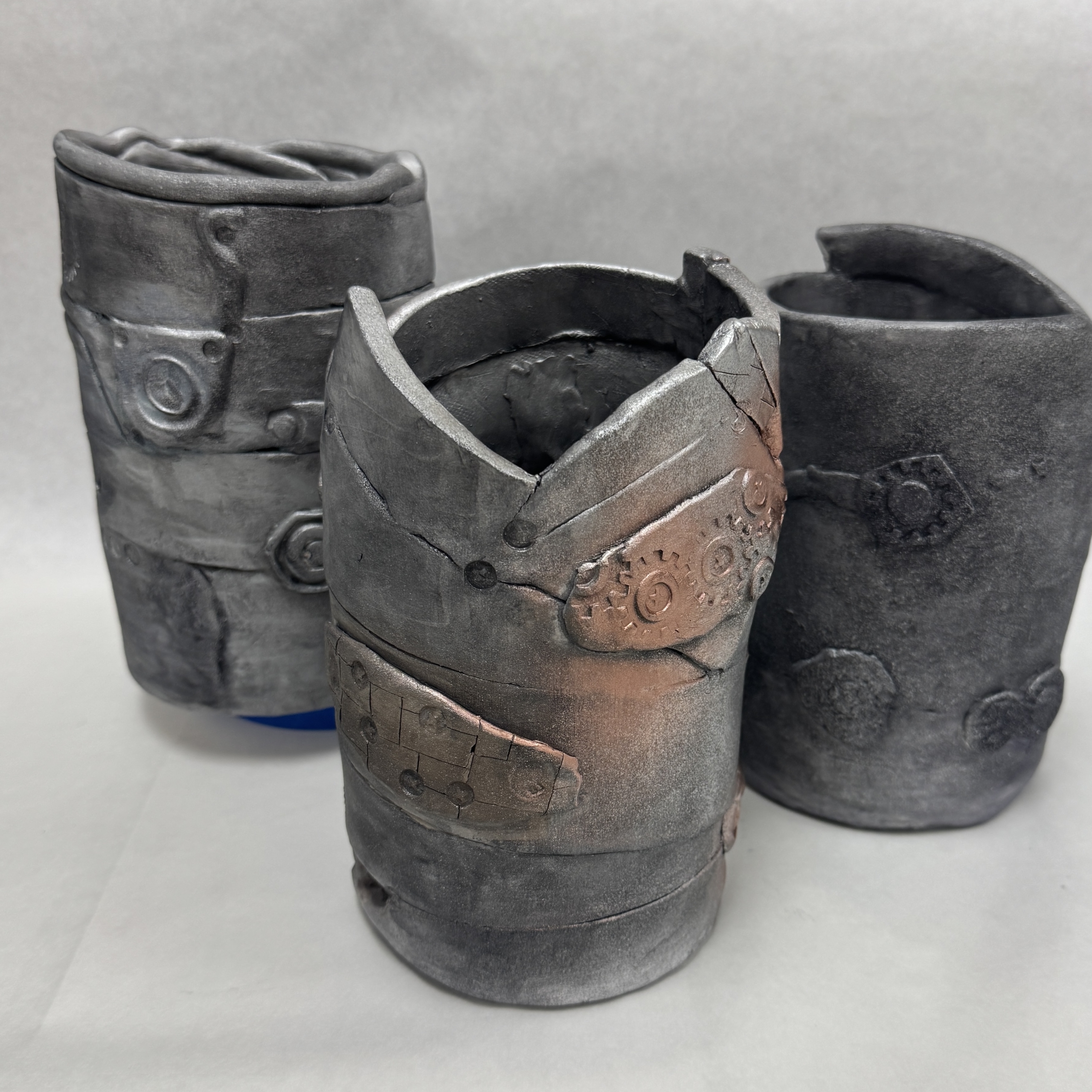
Steam Punk Vessel
Embrace imperfection while teaching slab building techniques using repurposed materials. Students wrap (or drape) a form with strips of rolled out clay then, stamp industrial textures and patterns using old hardware, chains, gears, and miscellaneous tool bench items. A cold finish is applied with paint after bisque firing.
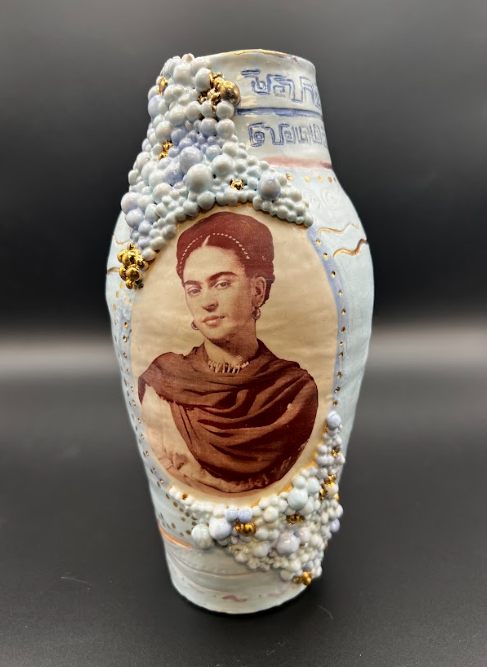
Roberto Lugo Inspired Portrait Pots
In this unit, students draw inspiration from contemporary ceramic artist Roberto Lugo to create personalized coil pots dedicated to influential individuals in their lives. The project involves advanced techniques such as underglazing, glazing, and gold luster accents across multiple firings. Students engage in reflection and artistic expression, cu
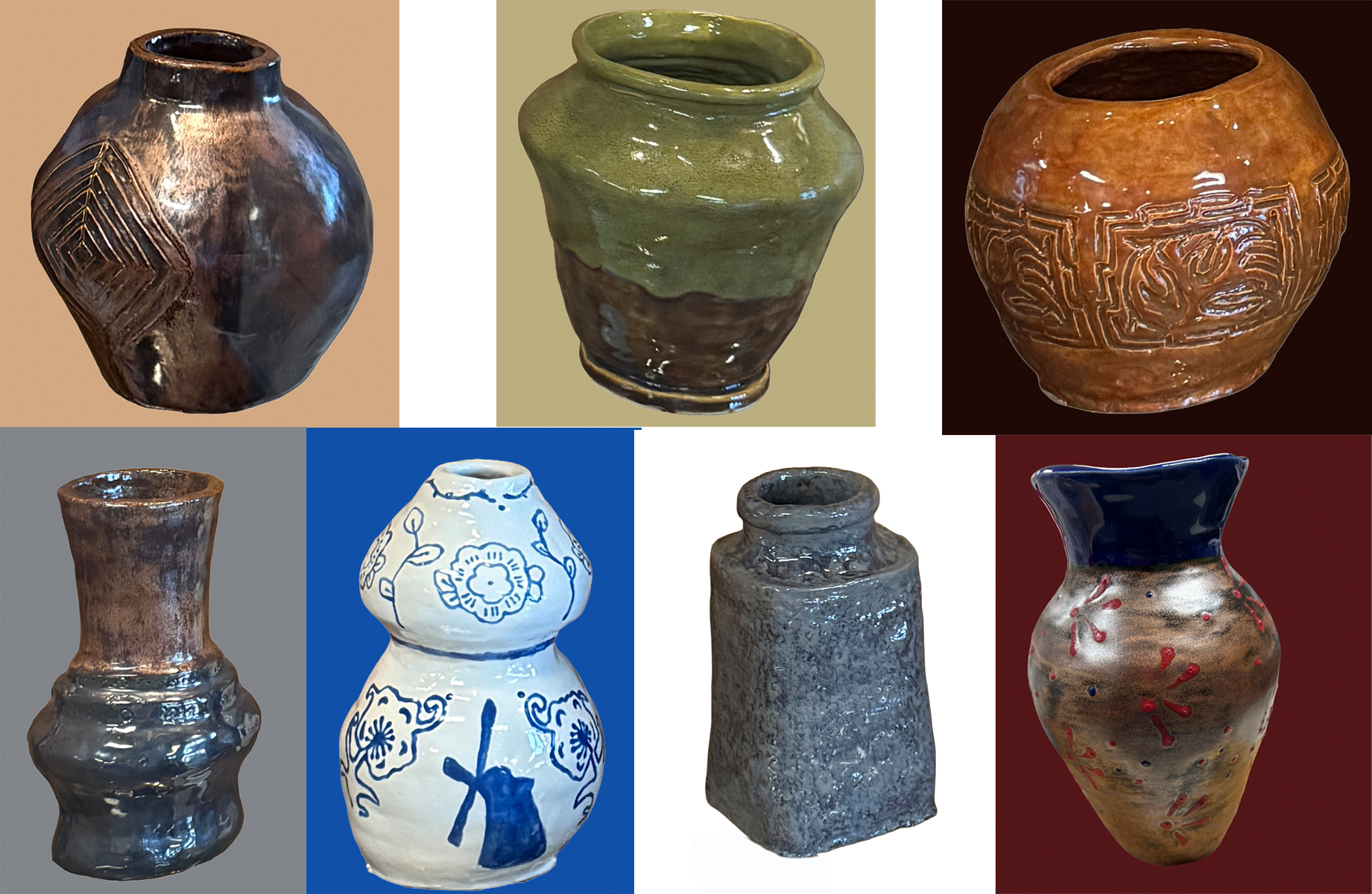
Coil Heritage Vessel
The Heritage Vessel project is a high school ceramics unit where students research their personal heritage (cultural, ethnic, ancestral traditions) and create a coil vessel that reflects elements of that heritage. Students will incorporate surface decoration, form, texture, motifs, or symbols inspired by their research.
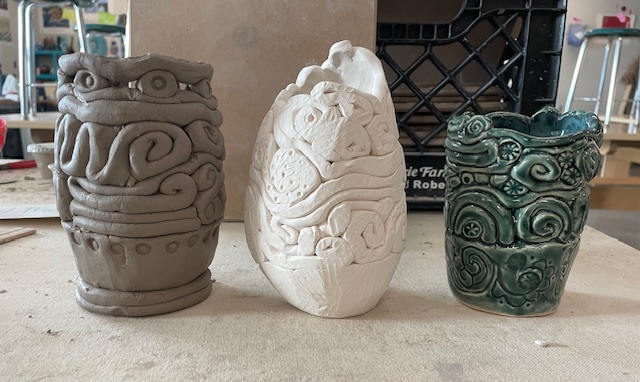
Built to Succeed: A Pinch and Coil Approach
Students build on their pinch pot skills to create a coil vessel using repetition, structure, and design. This scaffolded approach helps beginners develop stronger construction techniques while building confidence in working with clay.
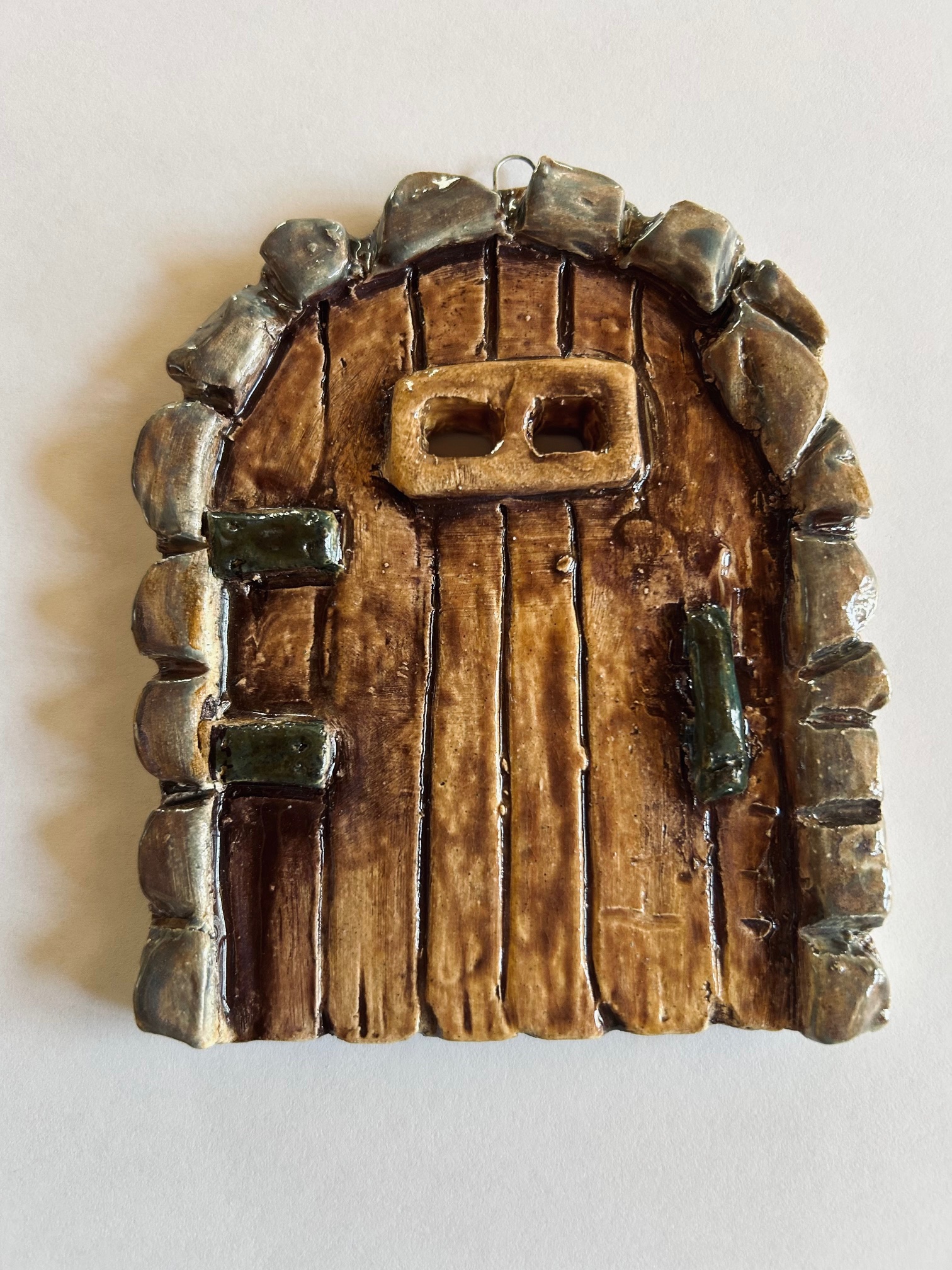
Pottery Portals
This project challenges students to create an imaginative mini door using slab and relief techniques. Students master the art of intricate attachments, creating small coils and hand-sculpted texture details.
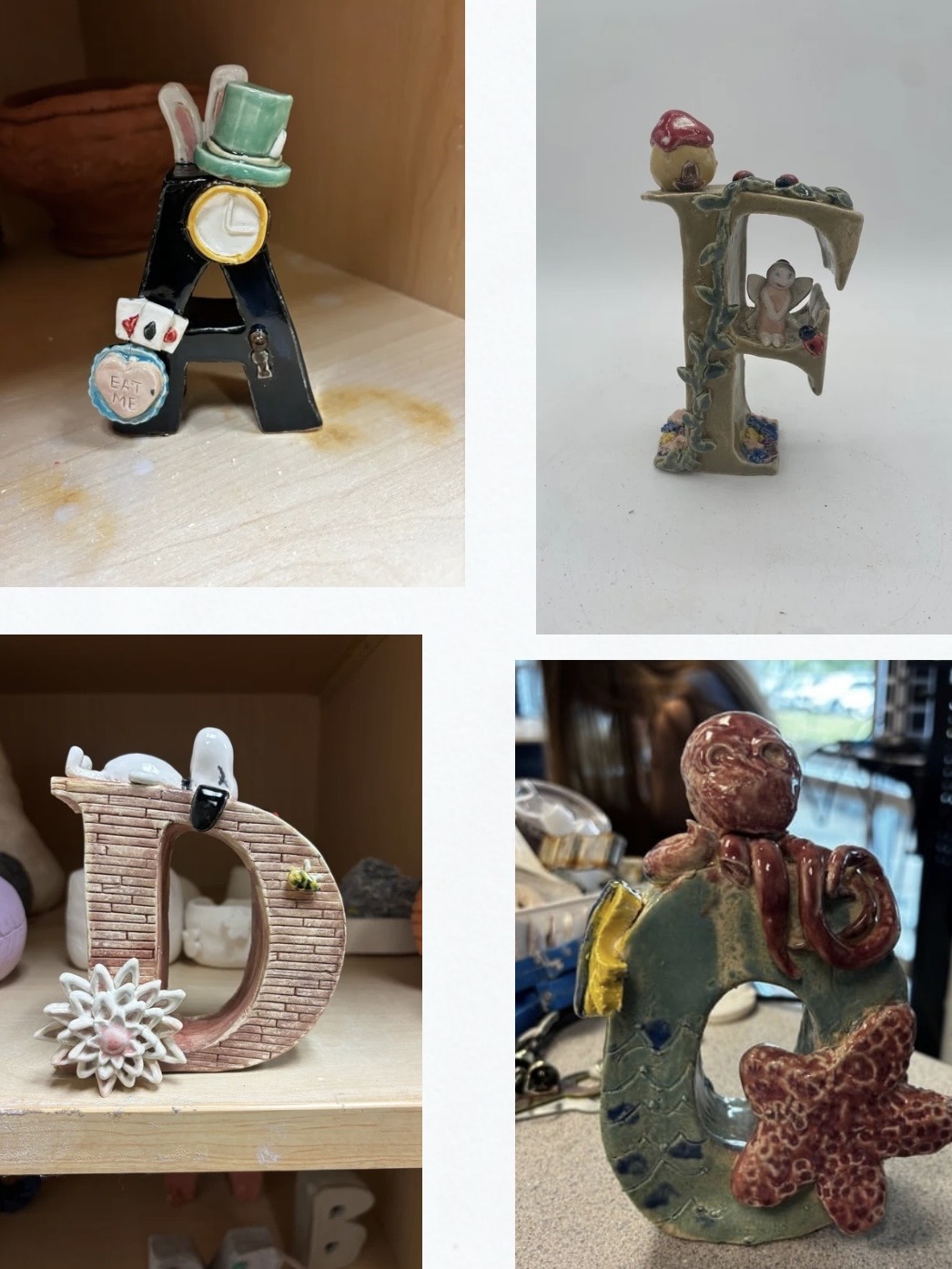
Illuminated Letters
Students explore the history of medieval illuminated manuscripts and transform a single letter into a freestanding ceramic sculpture. Using slab construction and surface decoration, they design a themed letter that incorporates texture, symbolism, and sculptural elements.
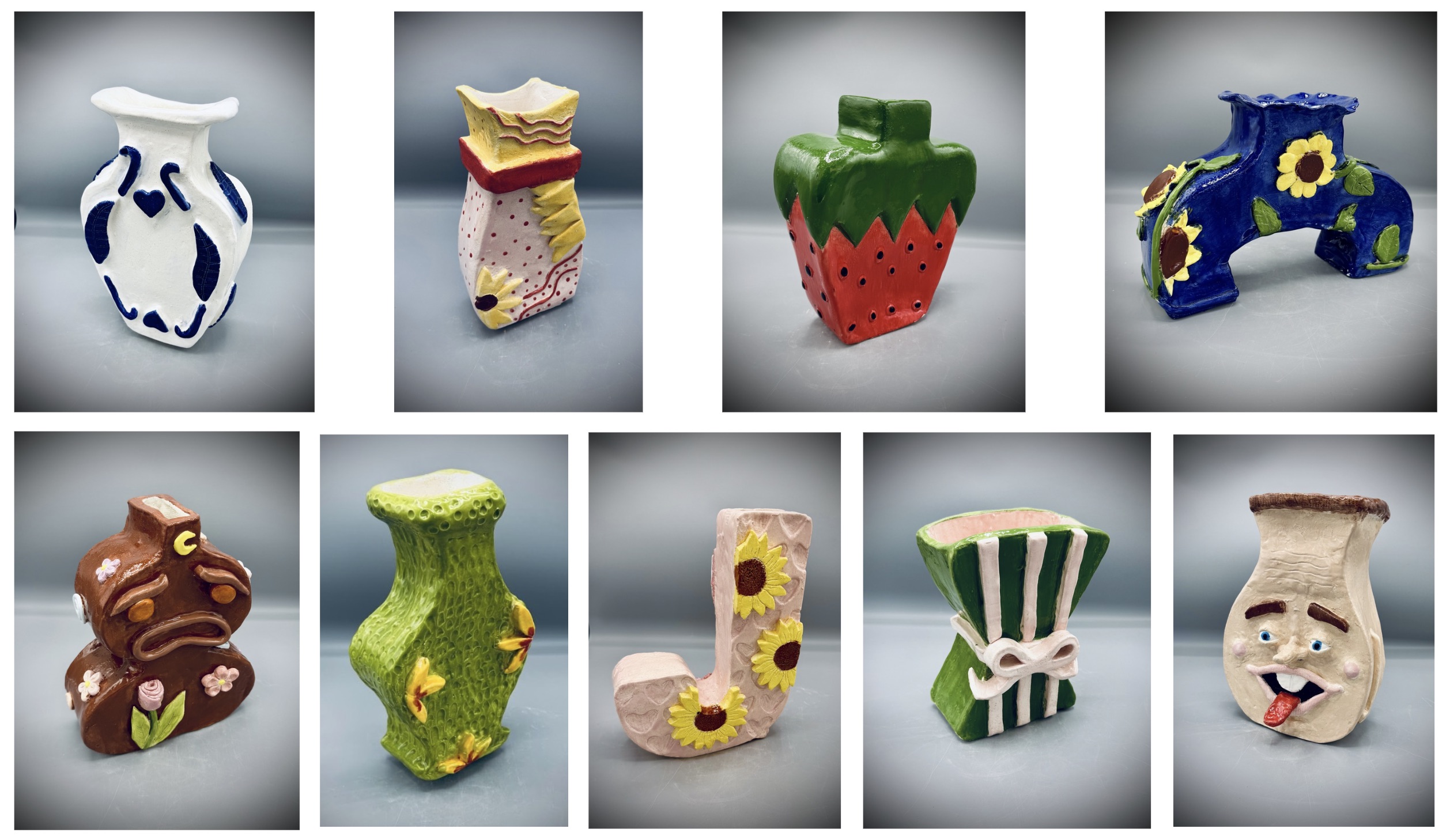
The 4-Sided Story: Appliqué Slab Vase
Students will design and create a four-sided ceramic vase using slab construction techniques and cover all four sides with their own creative appliqué design.
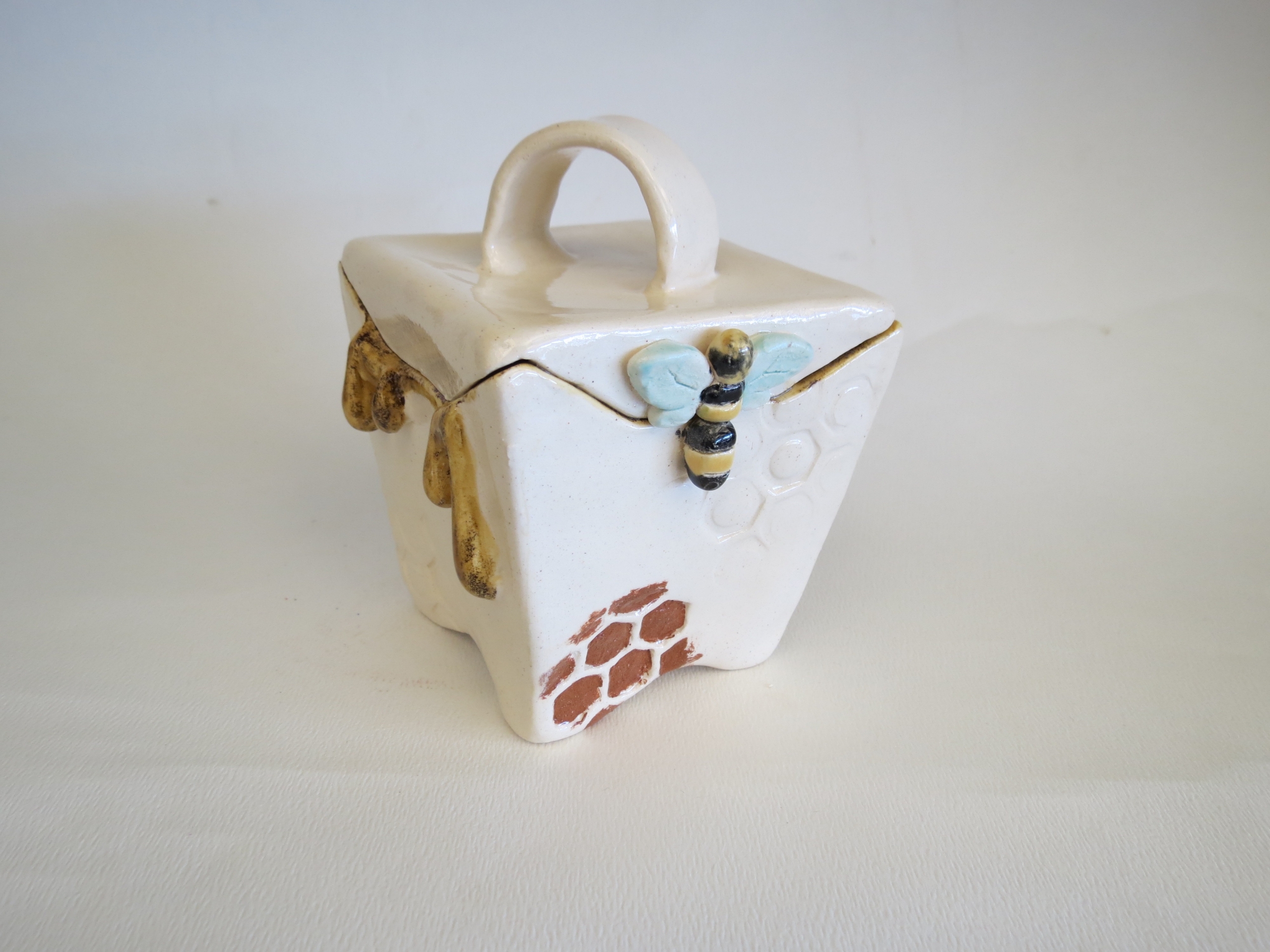
Slab Box with Roofing Paper Template
Using roofing paper, or in the case of the video a cereal box, students can create a fully enclosed box form with soft slabs. Students struggle with finding the right stage of clay to build with slabs, either too soft and floppy or too hard to join. The roofing paper solves all the issues students have building vertically with slabs.
Art Activism and Endangered Animals
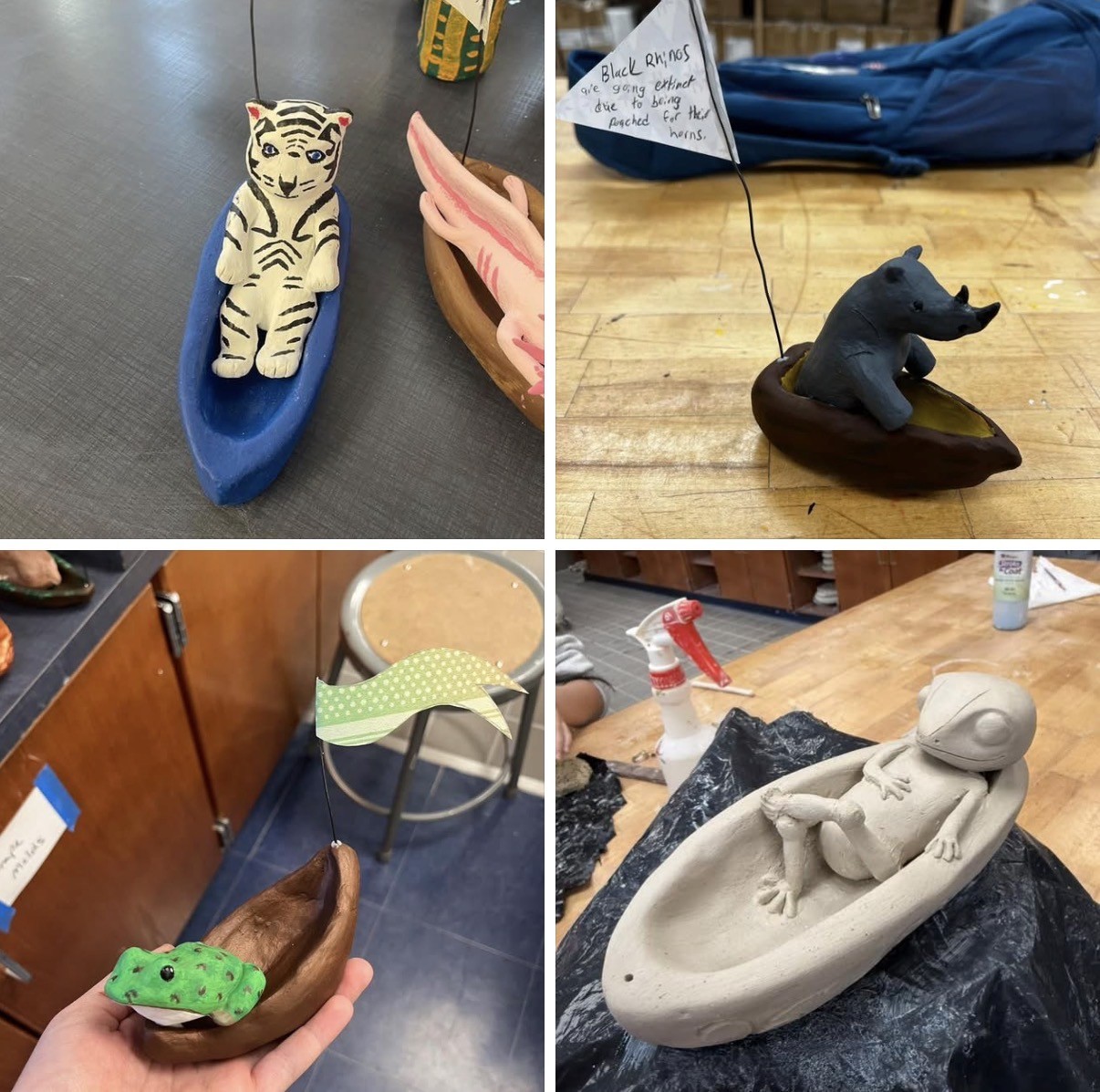
Students research an endangered animal. Once their animal is chosen, they make that animal out of clay and place it in a clay boat. In the back of the boat there is a flag with that animal’s interesting fact. Once all of the projects are completed, they are set up in an installation in the school where everyone can see them and read about them.
Sgraffito Plates
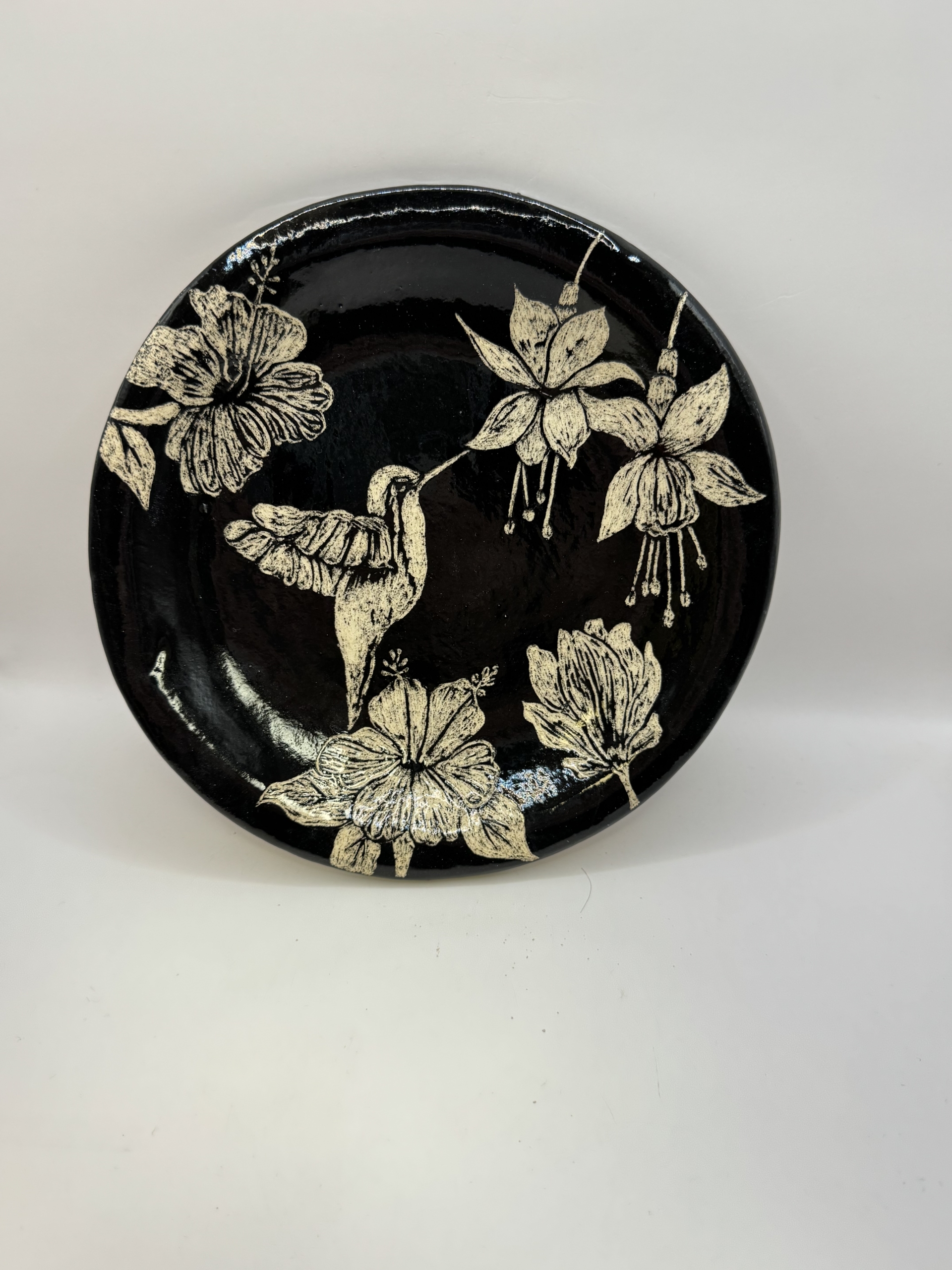
Students will make a plate using a slab and sturdy paper plate mold. Once leather-hard, they will apply underglaze or colored slip and decorate with the sgraffito technique.
Class Whistle: Bird Ocarina
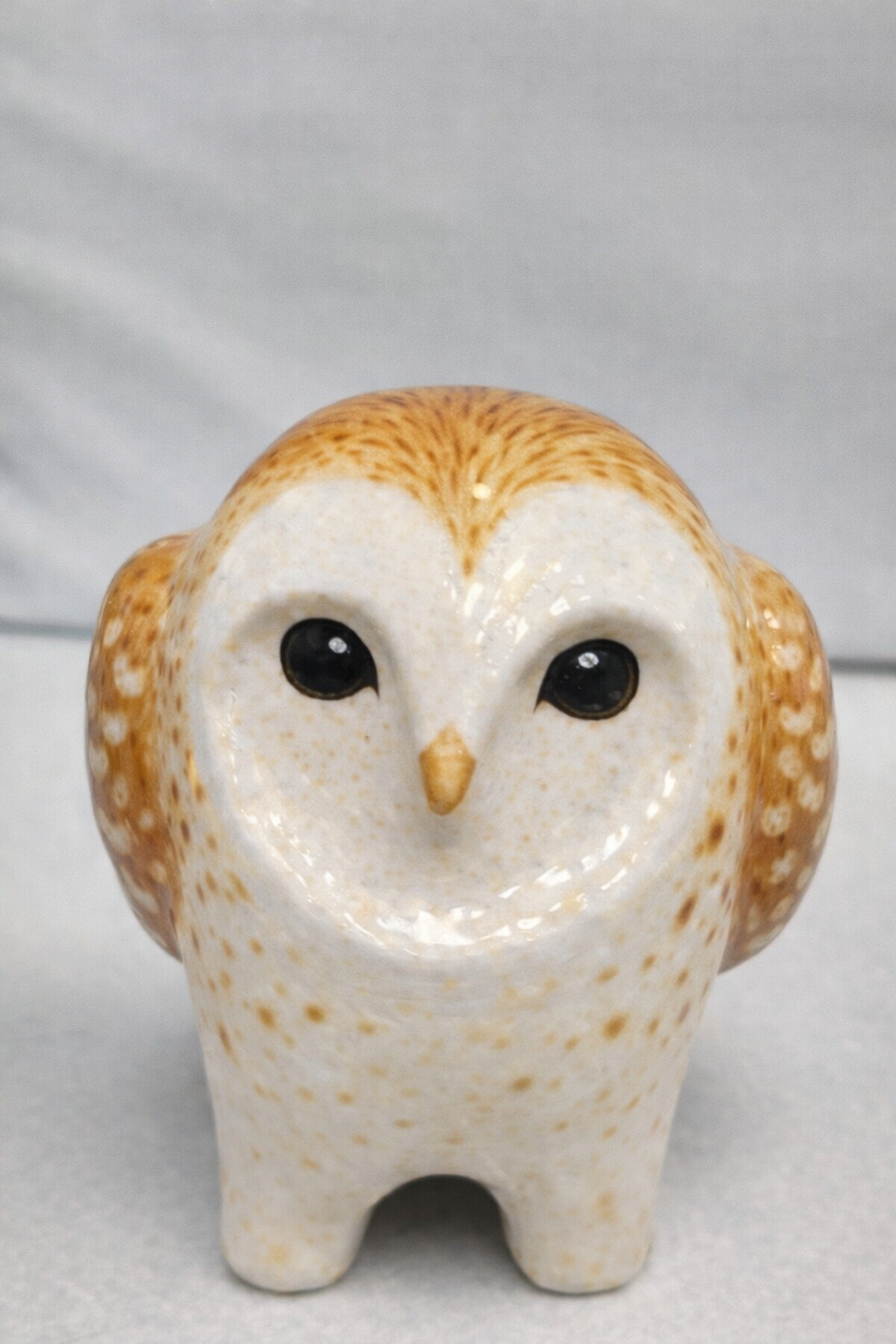
Students create a small clay ocarina by forming a hollow chamber from two pinch pots and shaping it into a bird-inspired form. They construct a windway using a wooden craft stick and cut a sound window so air can vibrate and produce sound. Finally, students test and tune their instrument by adjusting holes and refining the airflow.
The Exquisite Corpse
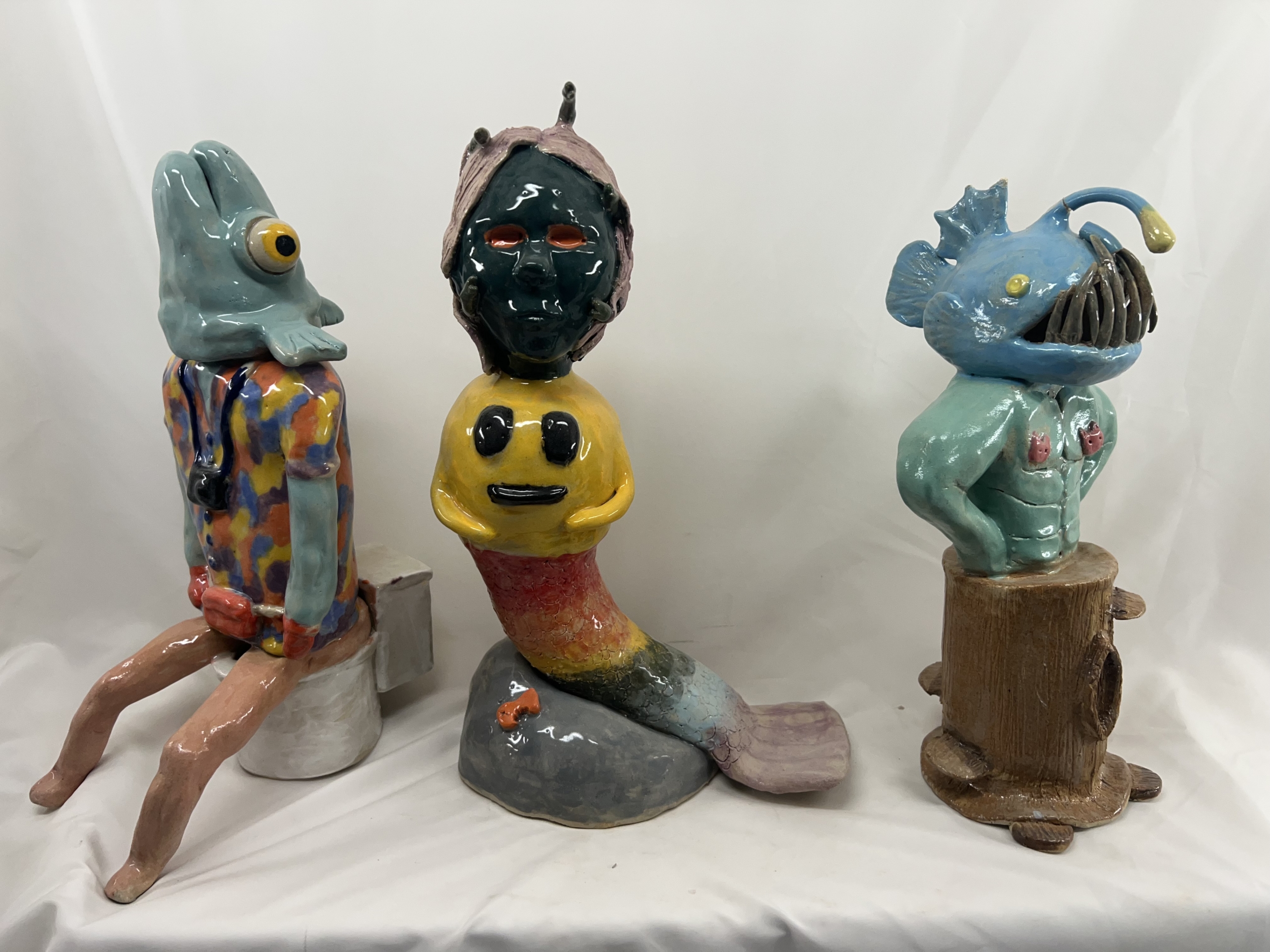
Students are randomly given the assignment of either head, torso, or legs. Then they create any version of that section of the body that they can think of, and at the end of the project they get grouped together to make one cohesive (and usually hilarious) piece.
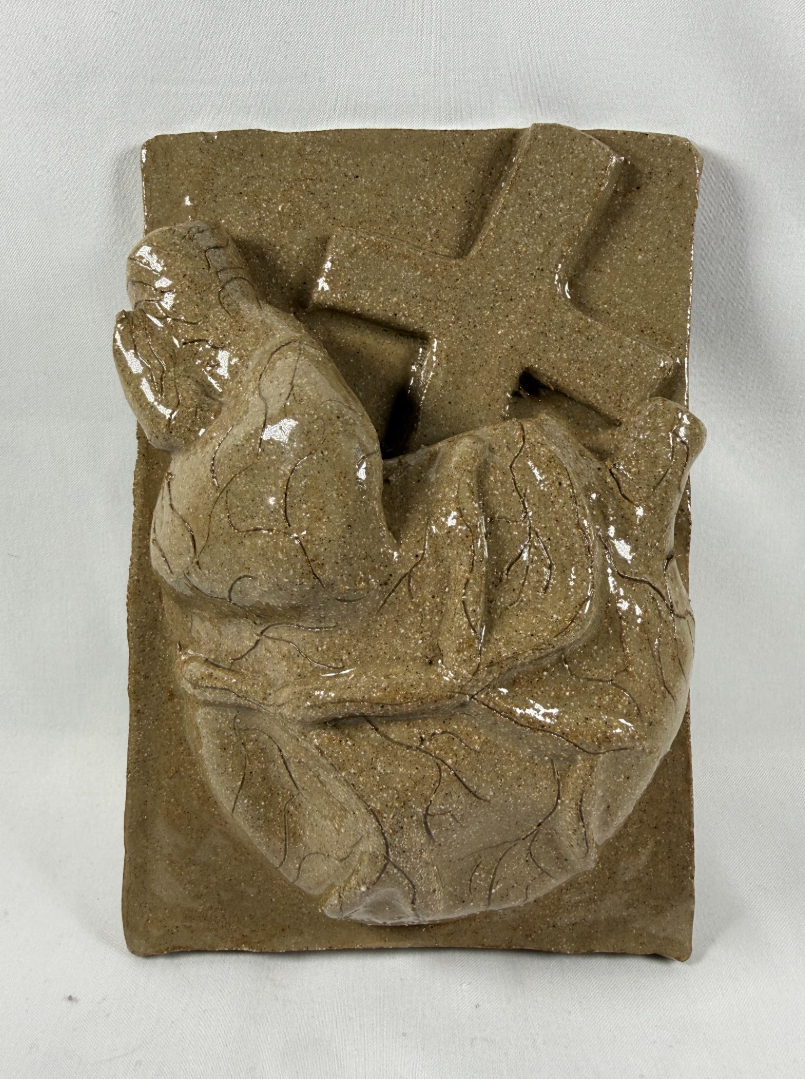
Sculptural vs. Functional – Ceramic Wall Hangings
Inspired by Riess’ ceramic wall sculptures, students create personal ceramic wall hangings using prior techniques, exploring functional vs. sculptural ceramics, materials, glazes, and art history while engaging in ideation, planning, and construction to develop individual concepts. Then, students are guided through reflection and peer connection.
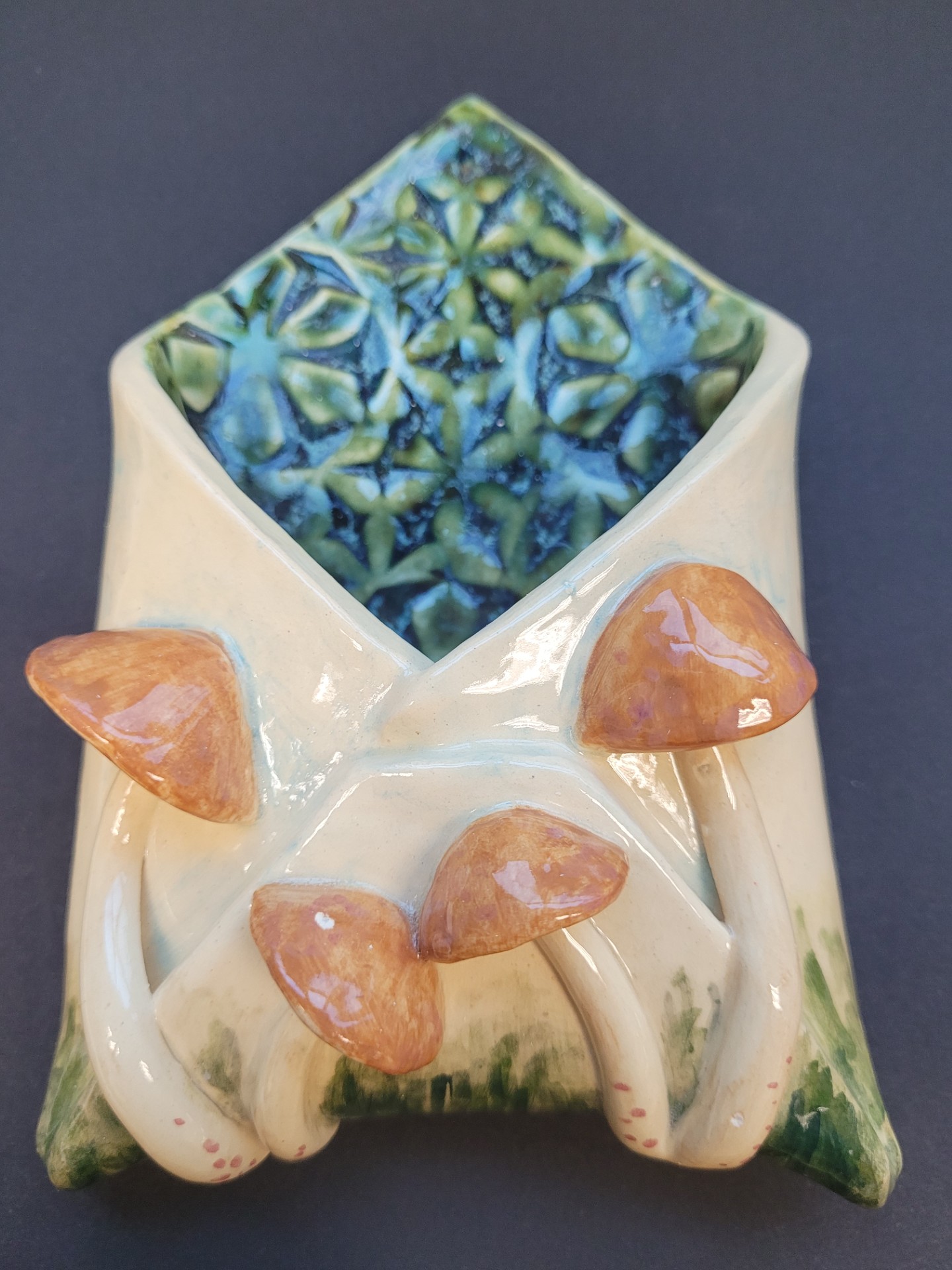
Environmental Envelopes
Students create ceramic envelopes by using a basic sqaure pattern, rolling out a slab of clay, constructing the envelope together, and adding details of environmental items of their choice.
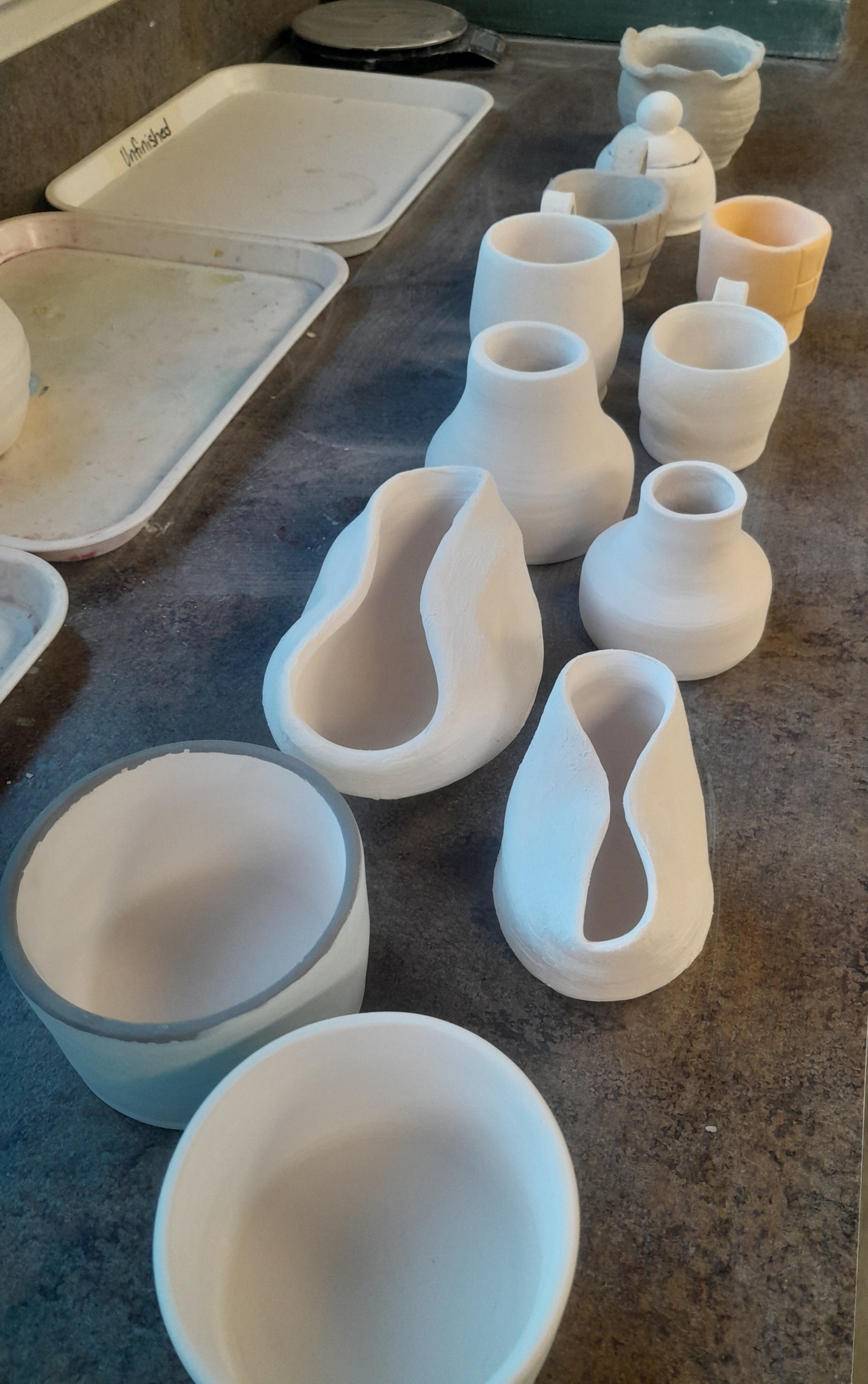
Wheel Time!
Inspired by the TV show “The Great Pottery Throwdown”, students will be given challenges to make pieces on the wheel. They have three weeks (12 school days) to accomplish their chosen challenge.
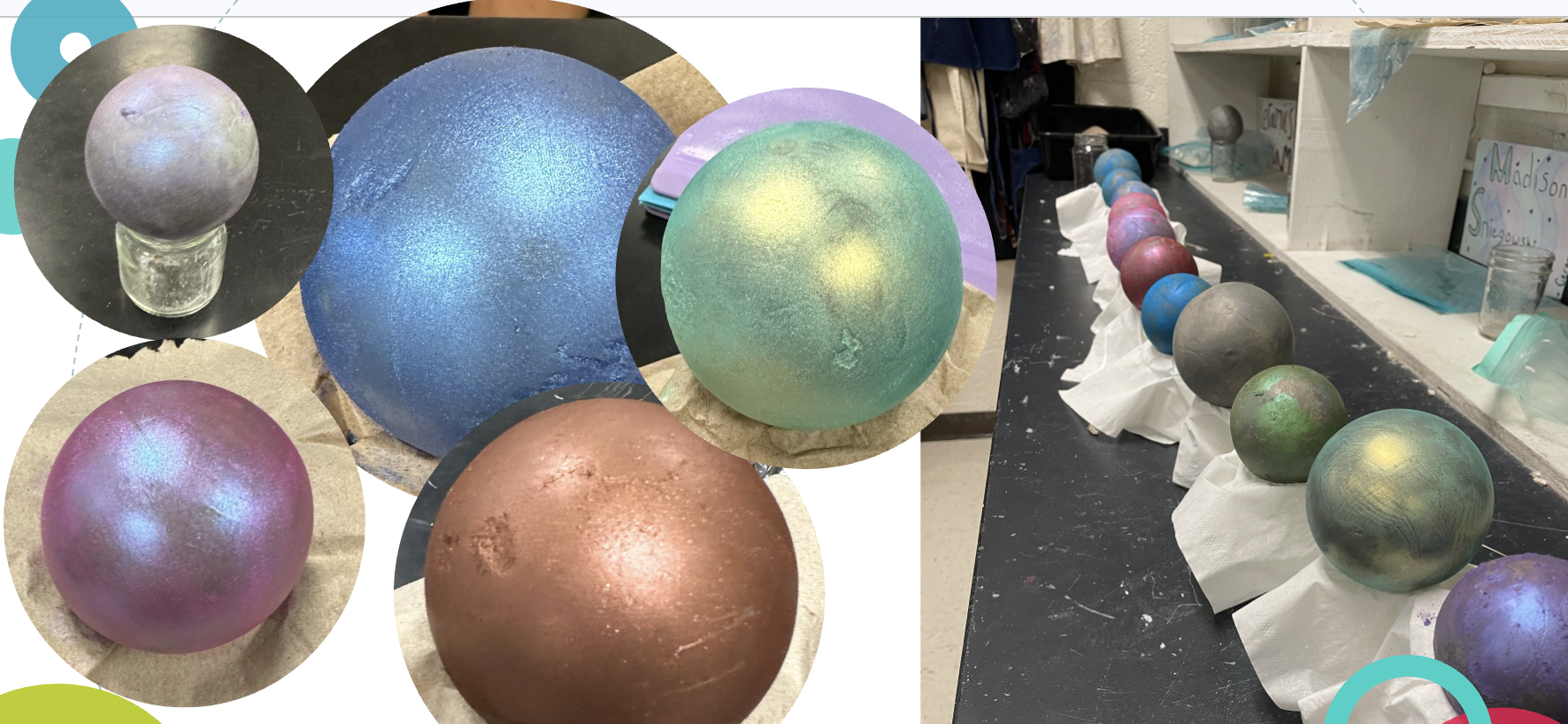
Get the Ball Rolling! (Dorodango)
Dorodango is the Japanese art of making a sphere or marble out of clay. In this lesson, we are going to use recycled clay to create our pieces, showing sustainability as well as saving money! The clay dorodango is not fired in a kiln, and therefore can also be re-recycled.
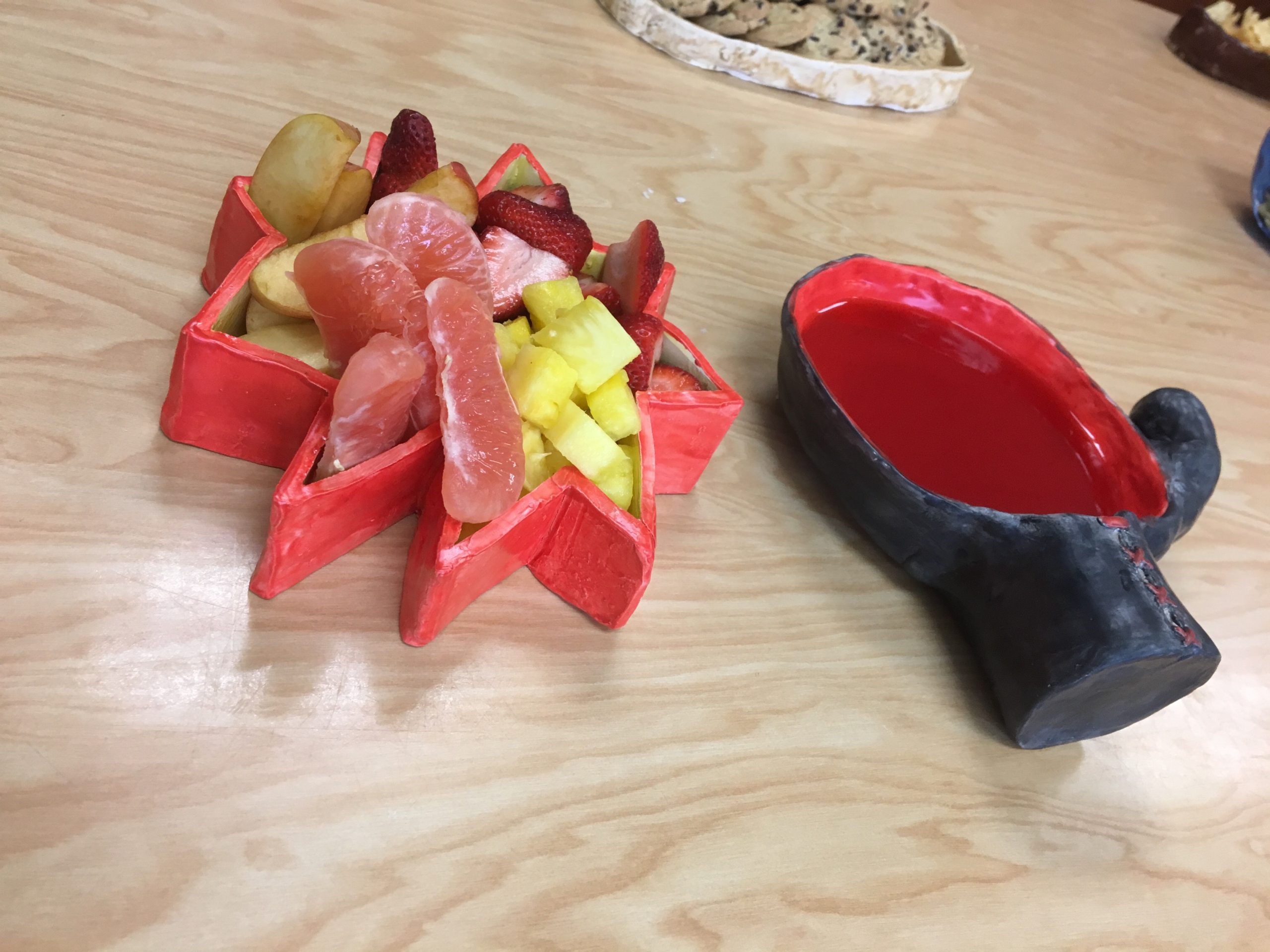
Potluck Project
Students will select a specific food and design a container, platter, or sculptural display intended for that food. It must be it clear what food belongs in the container without directly sculpting the food itself. The piece should creatively represent the idea of the food through form, texture, structure, or symbolism, rather than literal imagery.
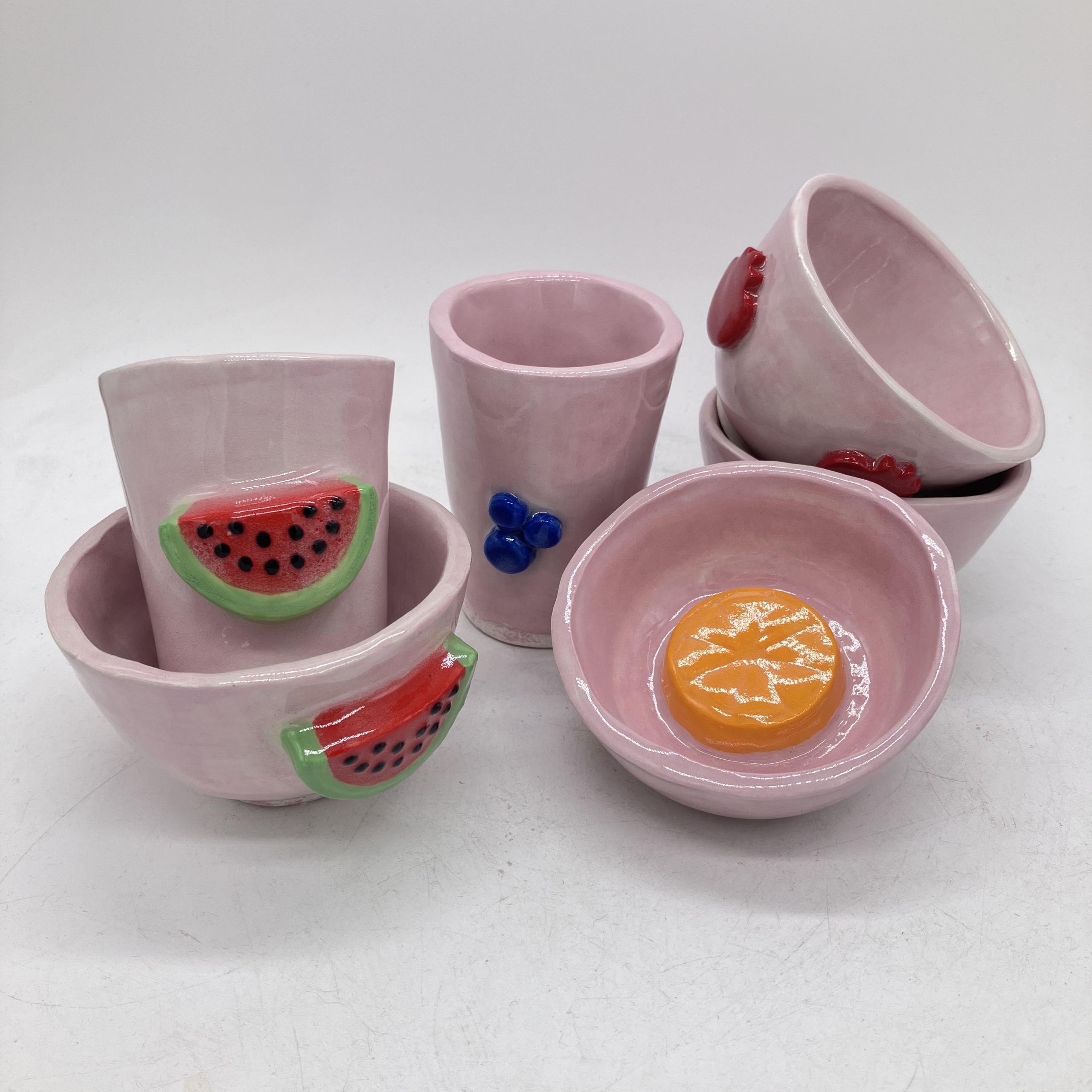
Slip Casting
My name is Allison Welch, and I teach Ceramics 1, 2, and 3 at Aloha High School, just outside Portland, Oregon! I’ve been here for 7 years and am a former college photography professor. I adore teaching, learning, and pushing all the boundaries in education.
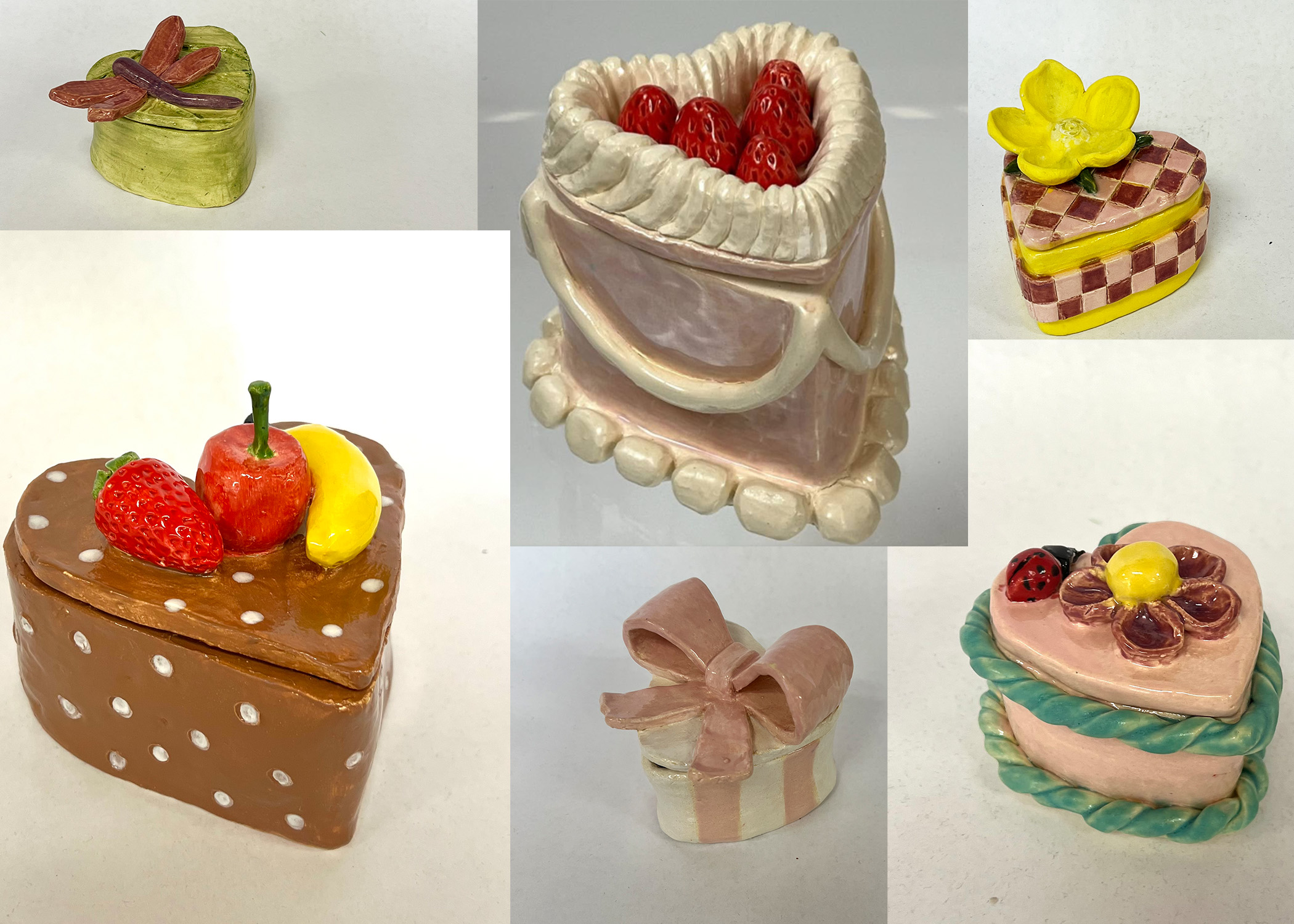
Slab Heart Box
In this project, students will design and construct a functional ceramic heart-shaped box using slab-building techniques. Students will explore how form, proportion, and surface design contribute to both functionality and aesthetic appeal.
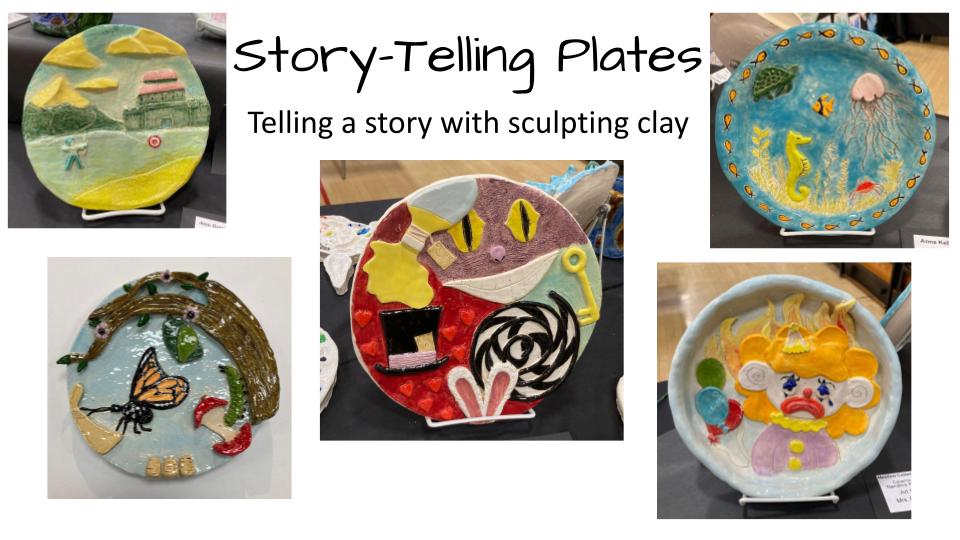
Story Telling Plate
Through handbuilding with clay students will create a story telling plate. The story can be personal, representing moments in their lives or a familiar story that they connect with. They will explore many clay techniques to create relief and texture as they create a composition that tells a narrative.
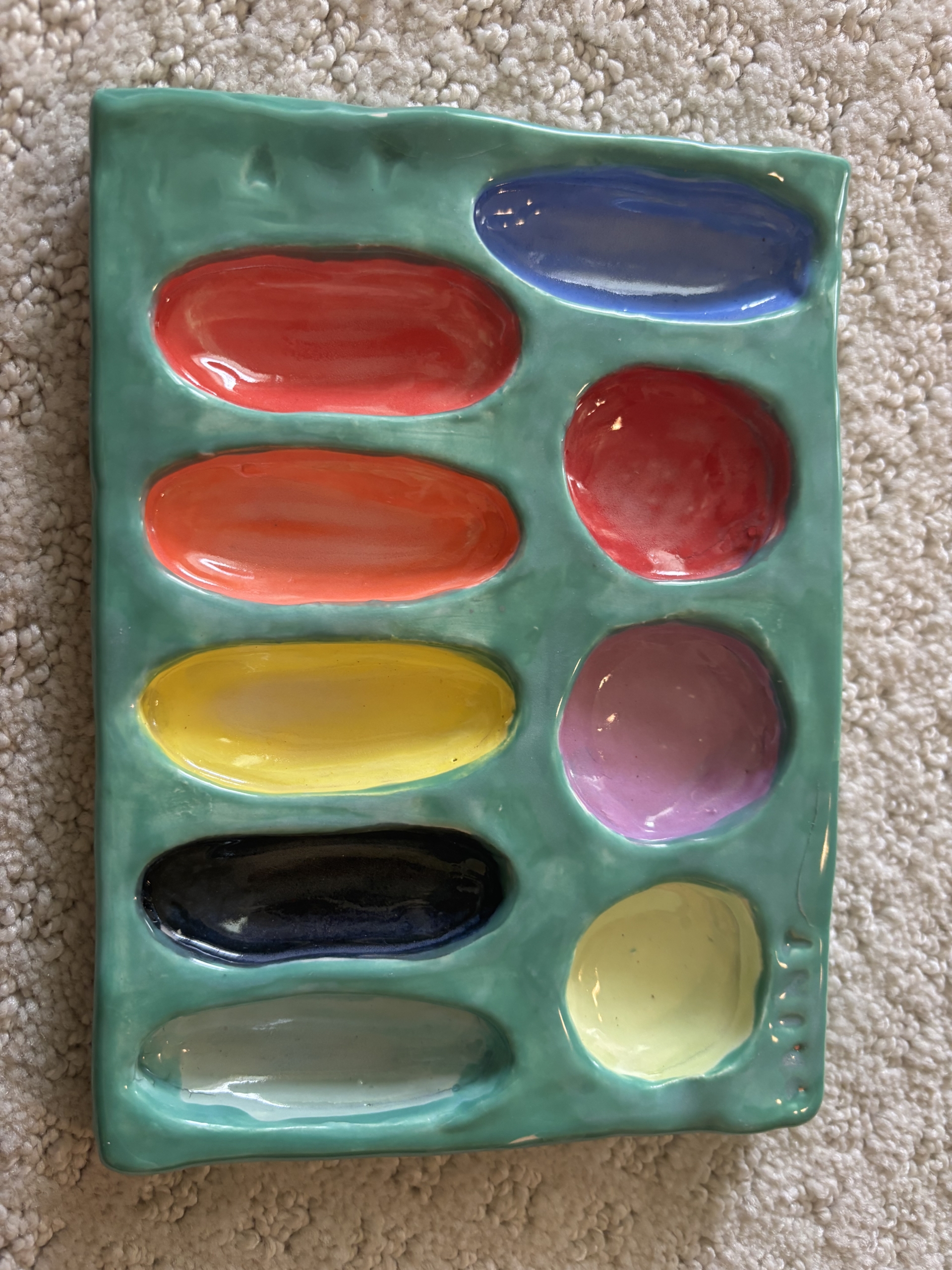
Clay Paint Palettes
My advanced classes (art 2, 3, 4) have had a brief experience with clay in art 1, but we make palettes in the spring as a fabulous skill refresher and to hone in on some valuable tools and skills needed for better handbuilding. We do this project just before learning about watercolor, and the palettes are used by students in the classroom.
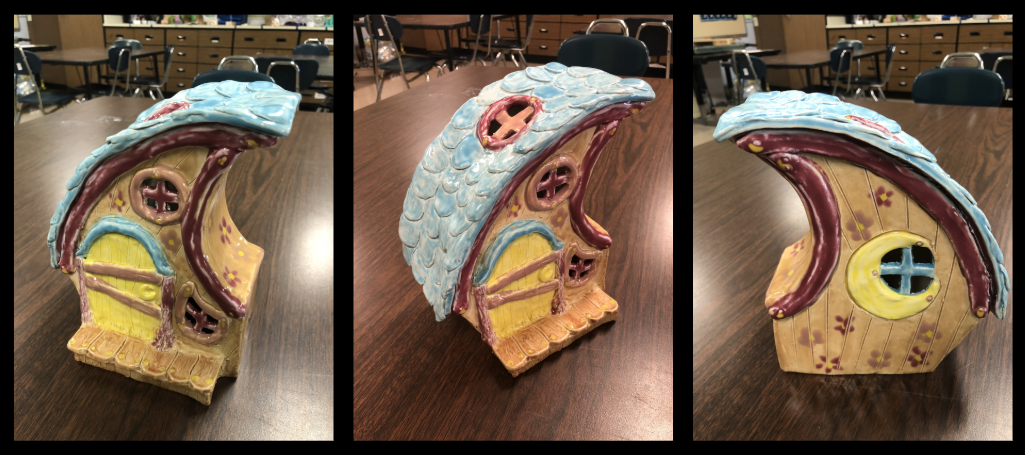
Whimsical Slab Houses
This project is a fun way to combine hand building techniques such as coil, pinch, and slab, focusing on slab for the main structure. Students will use artists such as Dr. Suess, Tim Burton, Patrick Dougherty, etc. They will use their inspiration to create a house that incorporates whimsical elements that you don’t see on an everyday basis.
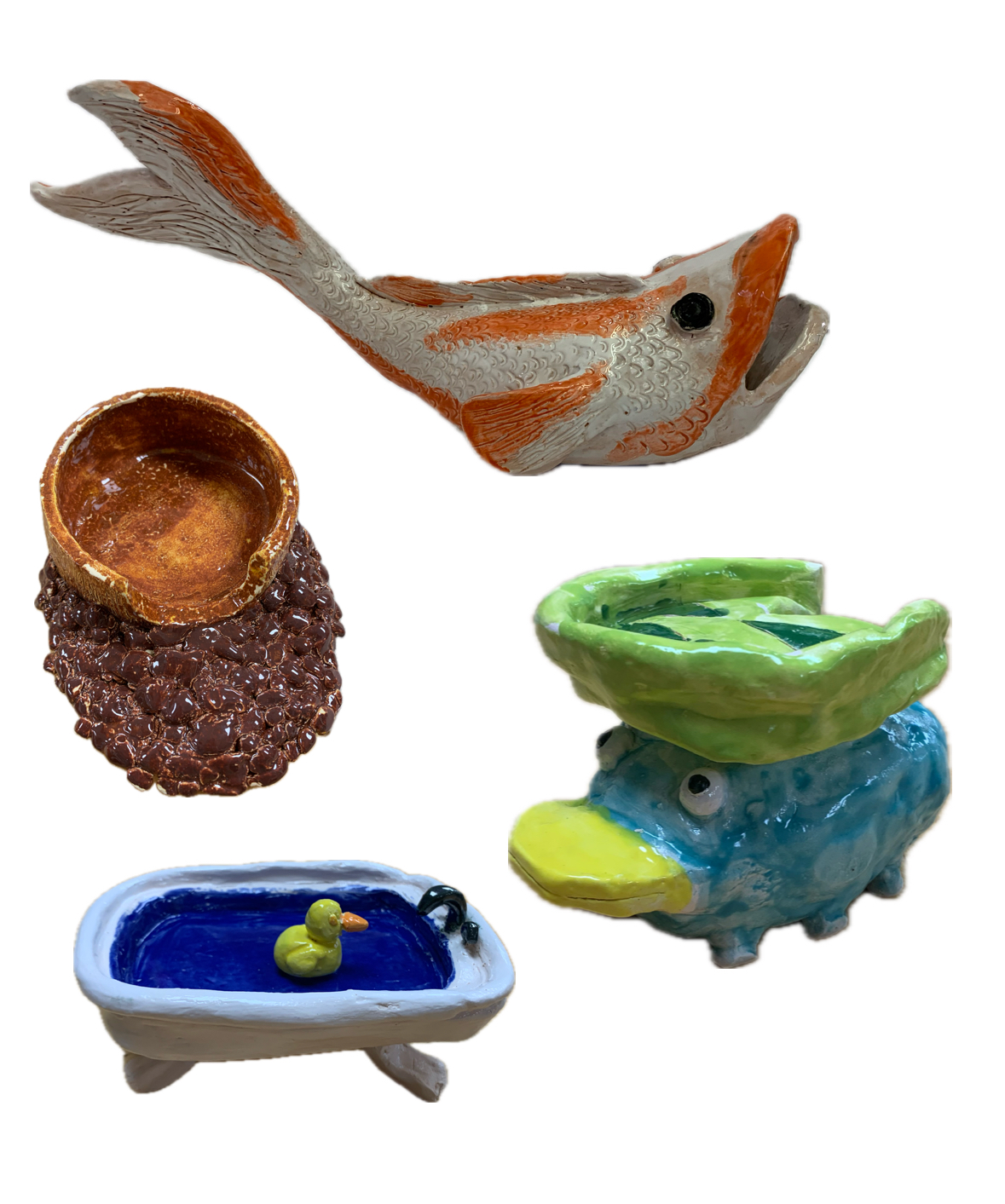
Soap Dishes
We begin this lesson after learning to slab and coil build. Students use this knowledge to create their sculptural soap dishes after being introduced to different types of soap dishes and their functionality. Students sketch out their designs and figure out what methods of construction work best to achieve their designs.
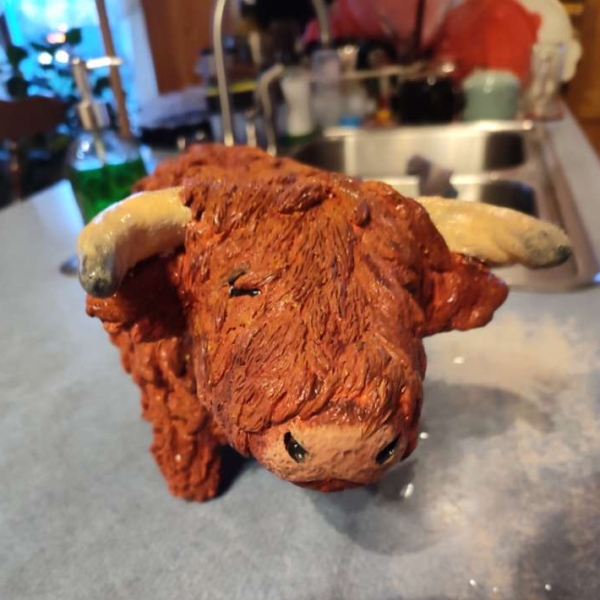
Textural Animal Sculptures
This lesson focuses on the development of sculptural and surface treatment skills. Students select an animal of their choice (real or mythical) and develop a sculpture using photograph references. Students build upon previously-introduced hand-building techniques to create their complex forms.
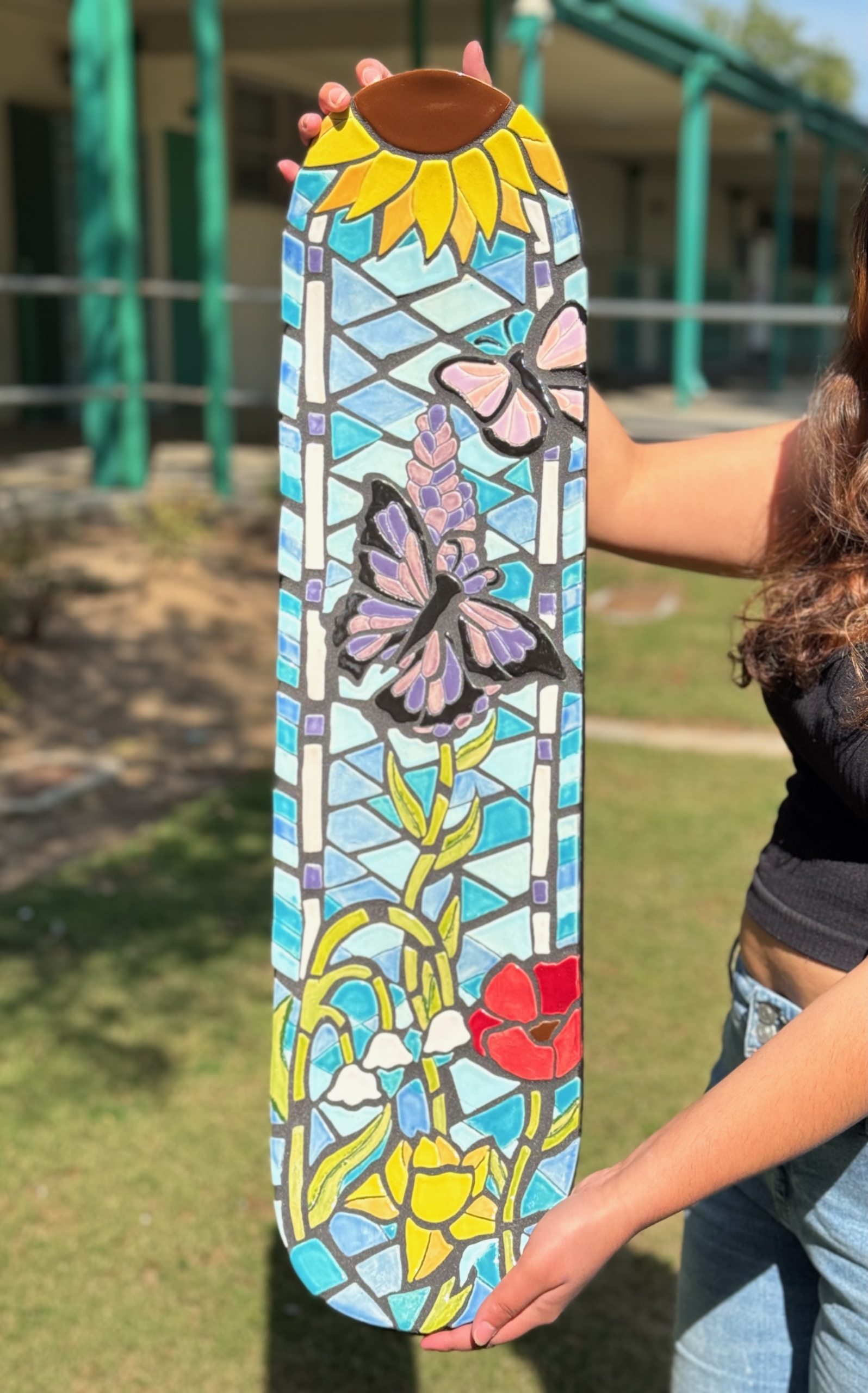
Skating into Mosaics
Students will design and create a custom mosaic tile installation on a wooden blank skateboard deck. Students will work through creative idea generation, working the clay, and final installation using tile adhesive and grout.
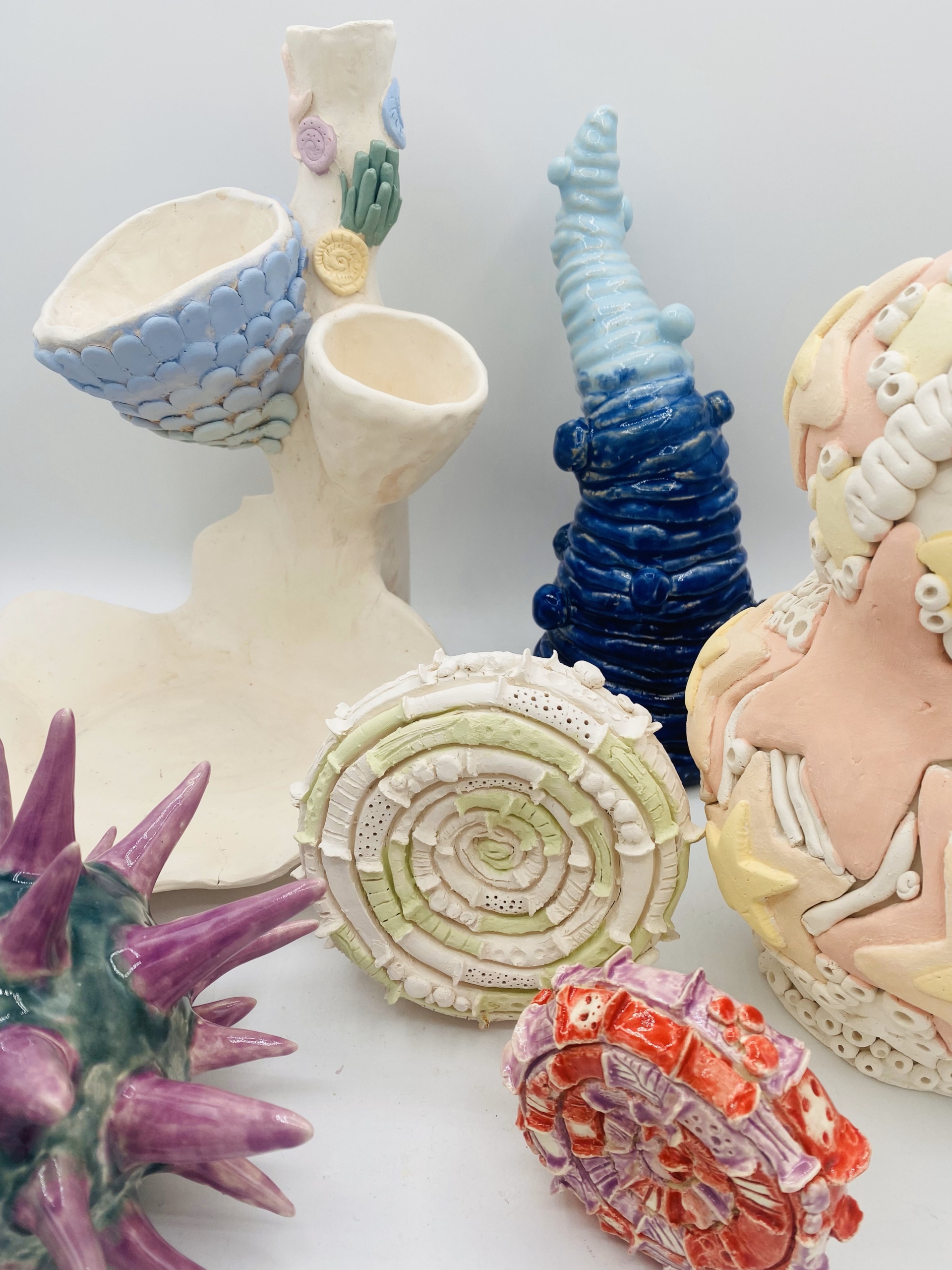
Amorphous Coil Vessels
Students will create an amorphous vessel by researching a microscopic organism from Ernst Haeckel’s Art Forms in Nature and translating its fluid, organic shapes into a 10″-tall coil-built form. This project invites students to blend scientific observation with creative clay construction, forging a deeper connection to natural forms and nature.

Buzz on Inn!
This project uses slab building as students become architects for solitary bees. Not only does this project have unlimited design aspects and encourage excellent handbuilding, but it is a great ecological lesson as well. Solitary bees do not maintain hives. Giving them a safe place to shelter helps protect the habitats of these early pollinators!
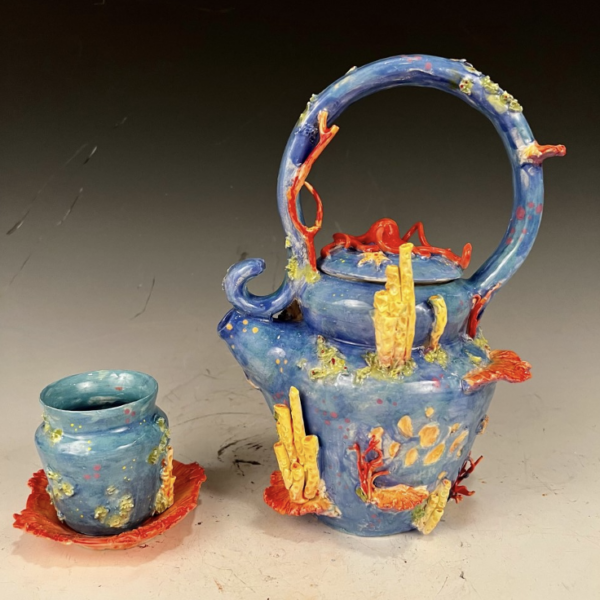
Creative Teapot
This teapot project is designed to challenge students to push their creativity, build or improve upon their ceramic skills, and to enhance their understanding of design, in both form and function. The teapot should be fully functional after glazing.
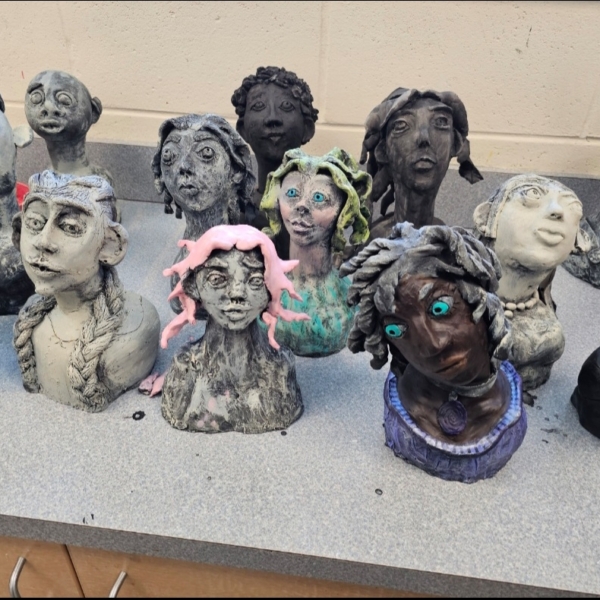
Frozen Faces
Students will create a bust, can be a self-portrait or any face. They will explore the pinch pot method, coil building and slab building all in 1 piece. Textures, will be added to bring character to the busts. Will show the cold finish method with acrylic paint to finish them.
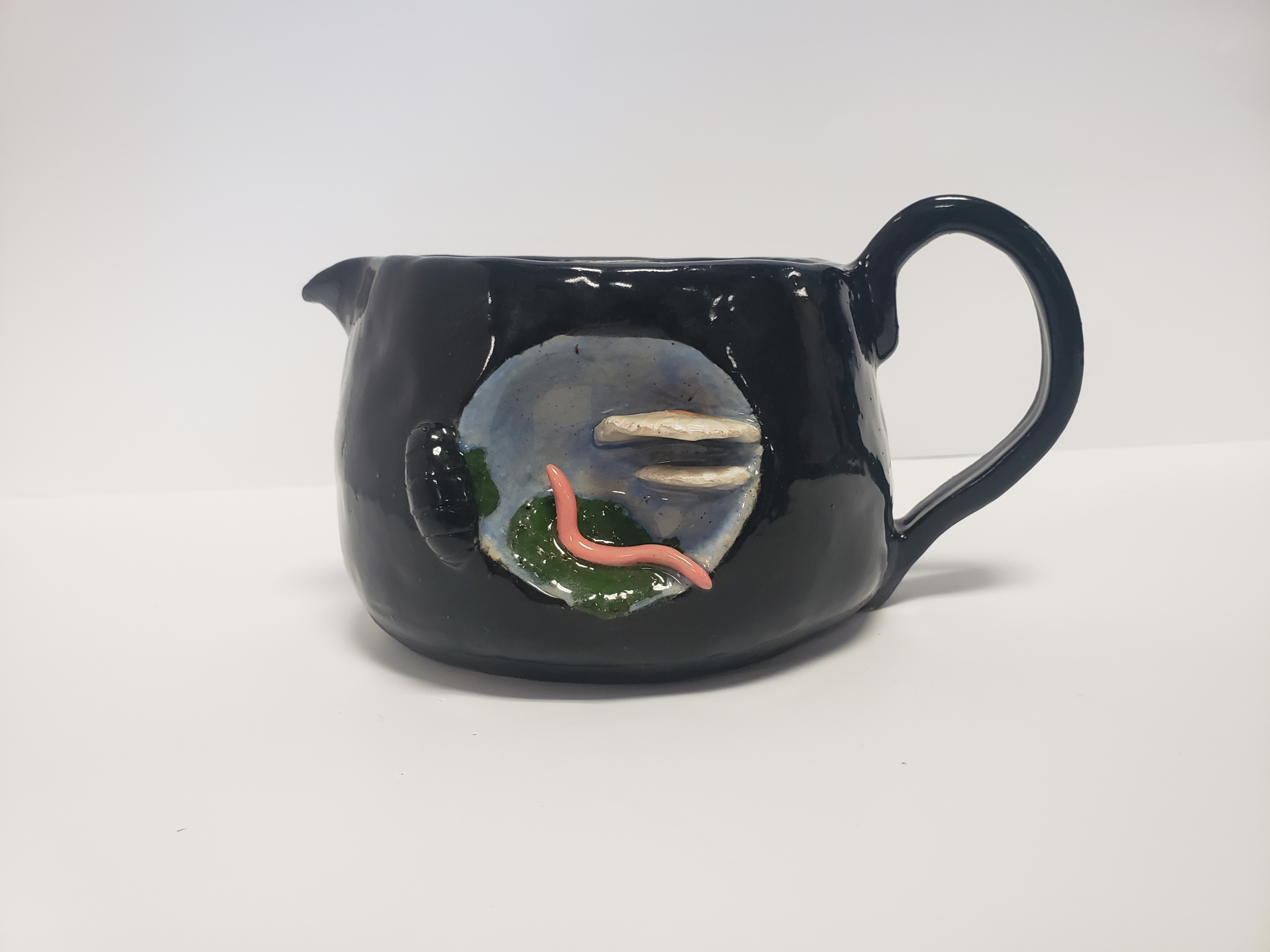
Vessels of Intention
In this lesson, students will create a sculptural or functional form curated for someone important in their life. This form/vessel will be curated towards the interests of the person it is made for. The students will create ceramic forms using their preferred method of working in clay. They can pinch, coil, slab, or even wheel throw their piece.
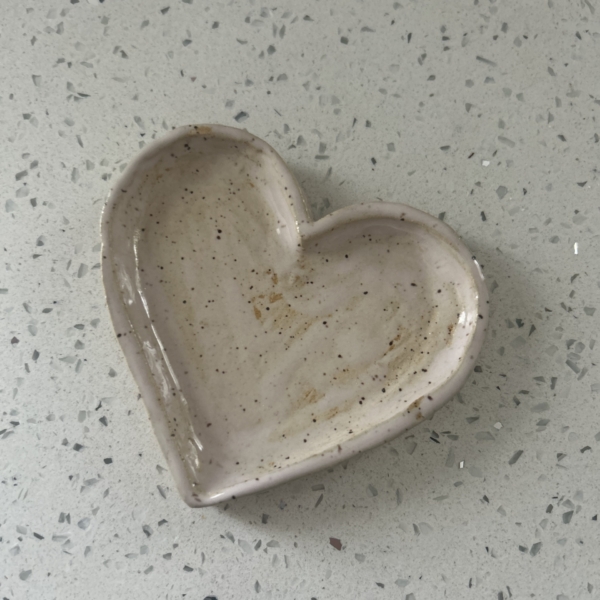
Trinket dish – heart shaped
Explore one of the easy lessons of functional designs with this heart shaped trinket dish!
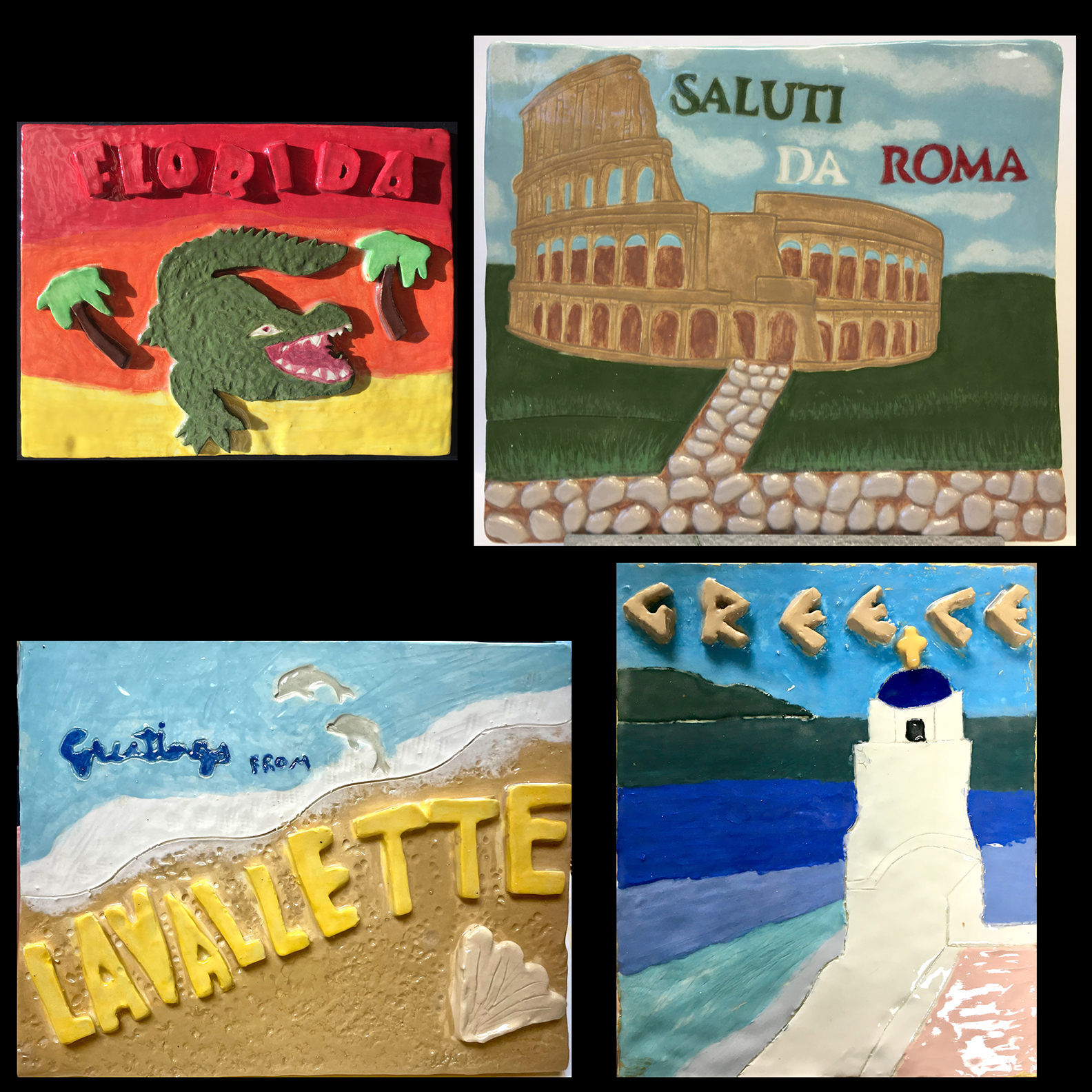
Relief Tile Inspired by Vintage Postcards
The inspiration for this assignment is vintage postcards from the 1900s through the 1960s. In this project, students will create a relief sculpture using a flat slab of clay as a background with additional flat layers of text and imagery, added textures, and carving. Color may be added with underglaze and/or glazes.
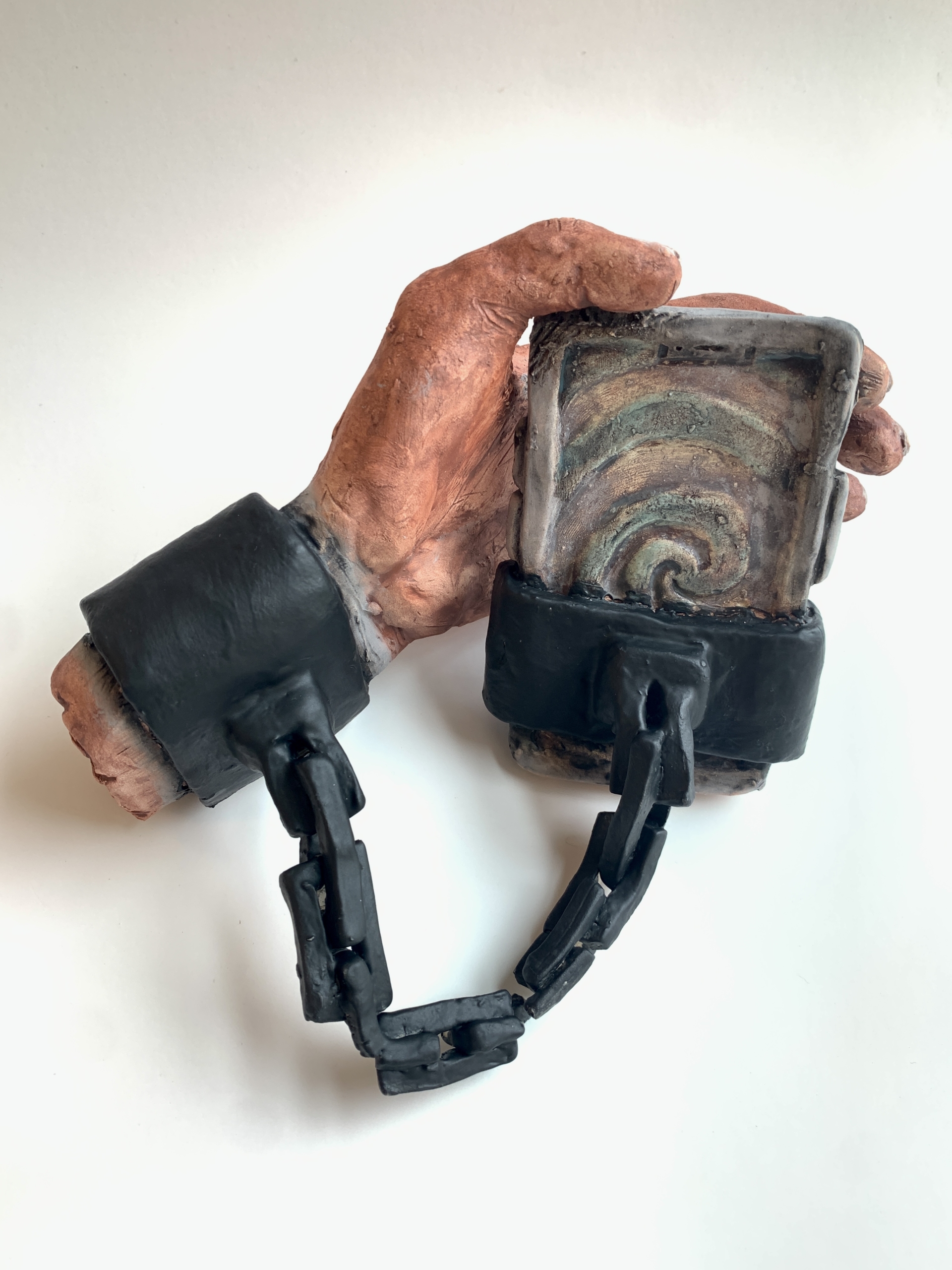
Clay for Change
In the ” Clay for Change” project, students create works of art in clay that take a stance on an issue that is important to them or to the community they live in.
Students may choose a topic that is social, political, environmental, etc. This lesson is best suited towards high school, but could be tailored to work with middle school ages, too.
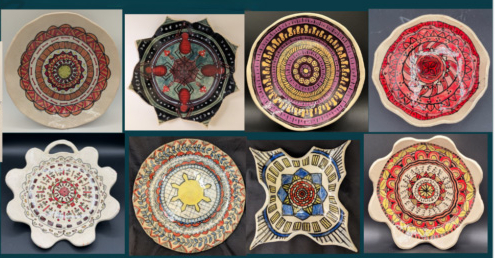
Mandala Inspired Radial Push Plate
Students learn about sand mandalas and other forms of radial design. Then create their own radial designs using symbols they develop to express themselves (hobbies, culture, family). Students learn about slab construction through building a push-plate with interesting feet.
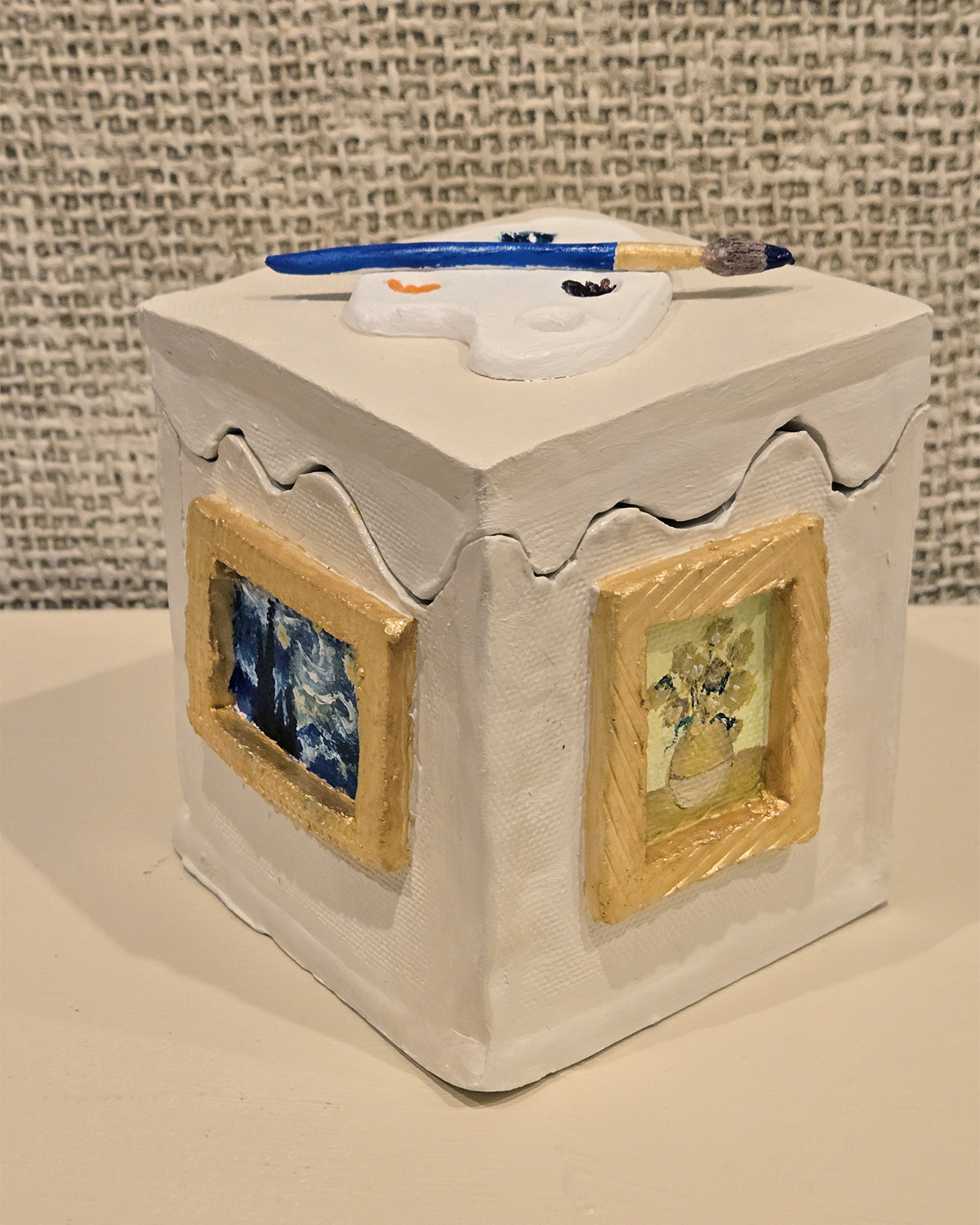
Themed Clay Boxes
The students have to create a functional box that has a theme throughout. The theme can be simple like nature or more complex. This lesson teaches students how to build with slabs, attaching objects, possible small sculpting, carving/decoration, lid function, and glaze application (or paint if the student chooses).
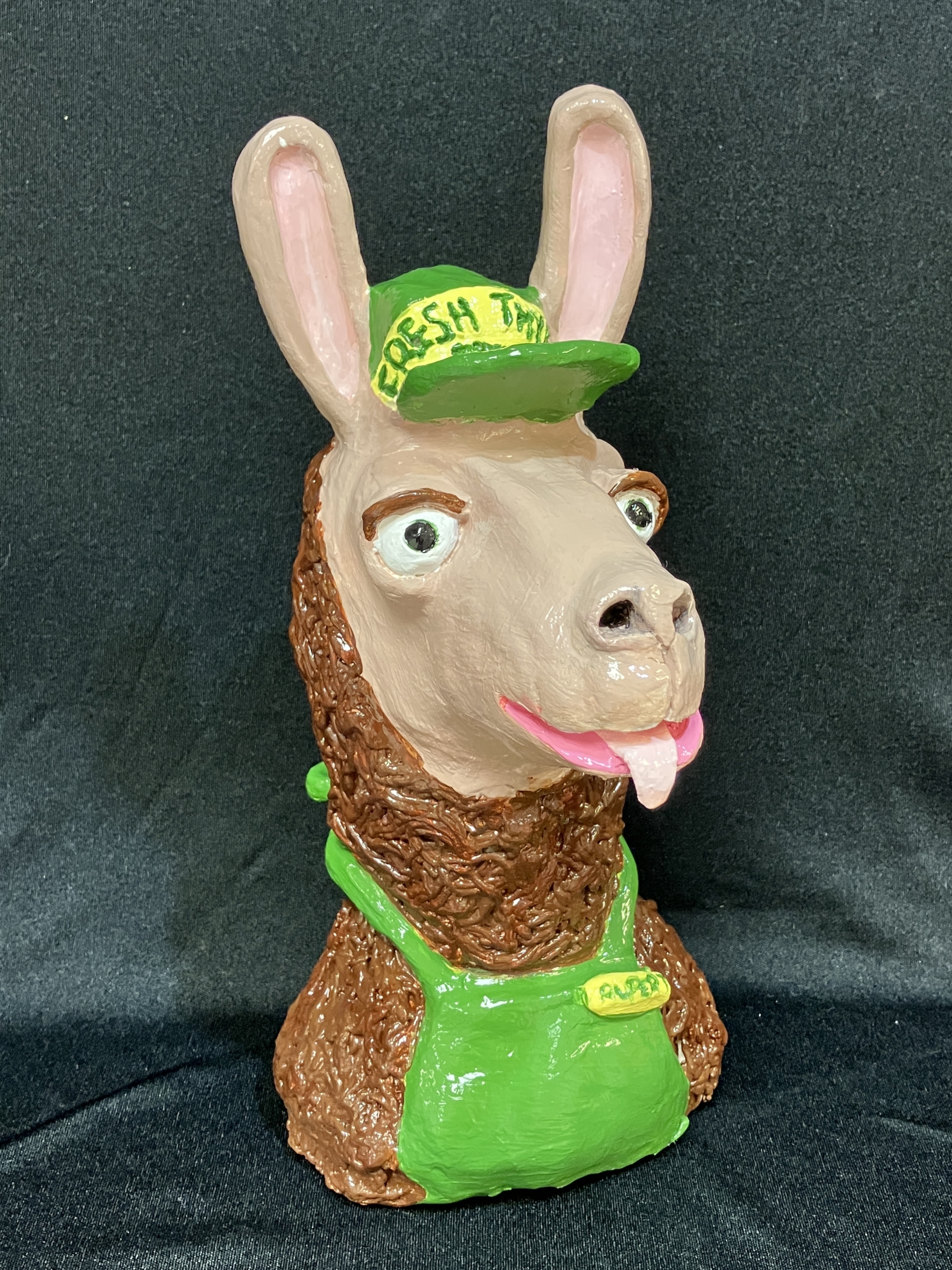
Animorphic Busts
Students will learn how to form a base over an armature to create a bust of a human/animal and practice good structural technique.
Students will combine the features of an animal with that of a human to create an animorphic bust.
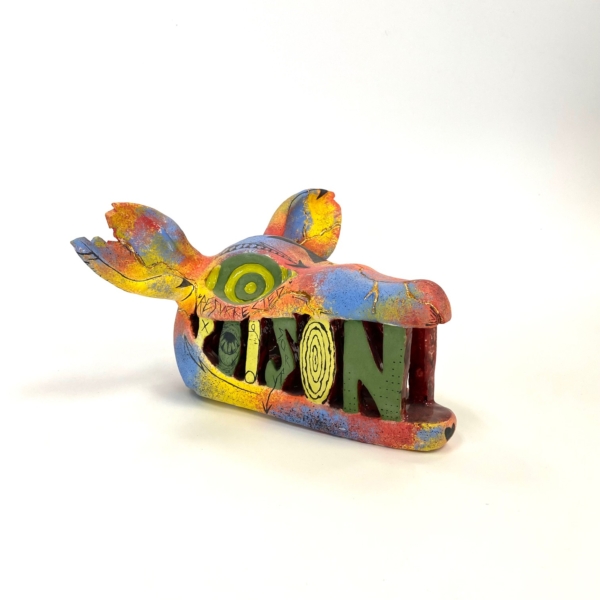
Surreal Ceramics: This Inspired THAT!
Students choose a surreal image from a collection I curate and write a narrative about the piece. They can tackle this as if it’s a critique of the surreal artwork or go totally down the path of making up a story about the artwork. Students then decide if they want to make a sculptural or functional piece inspired by the image and narrative.
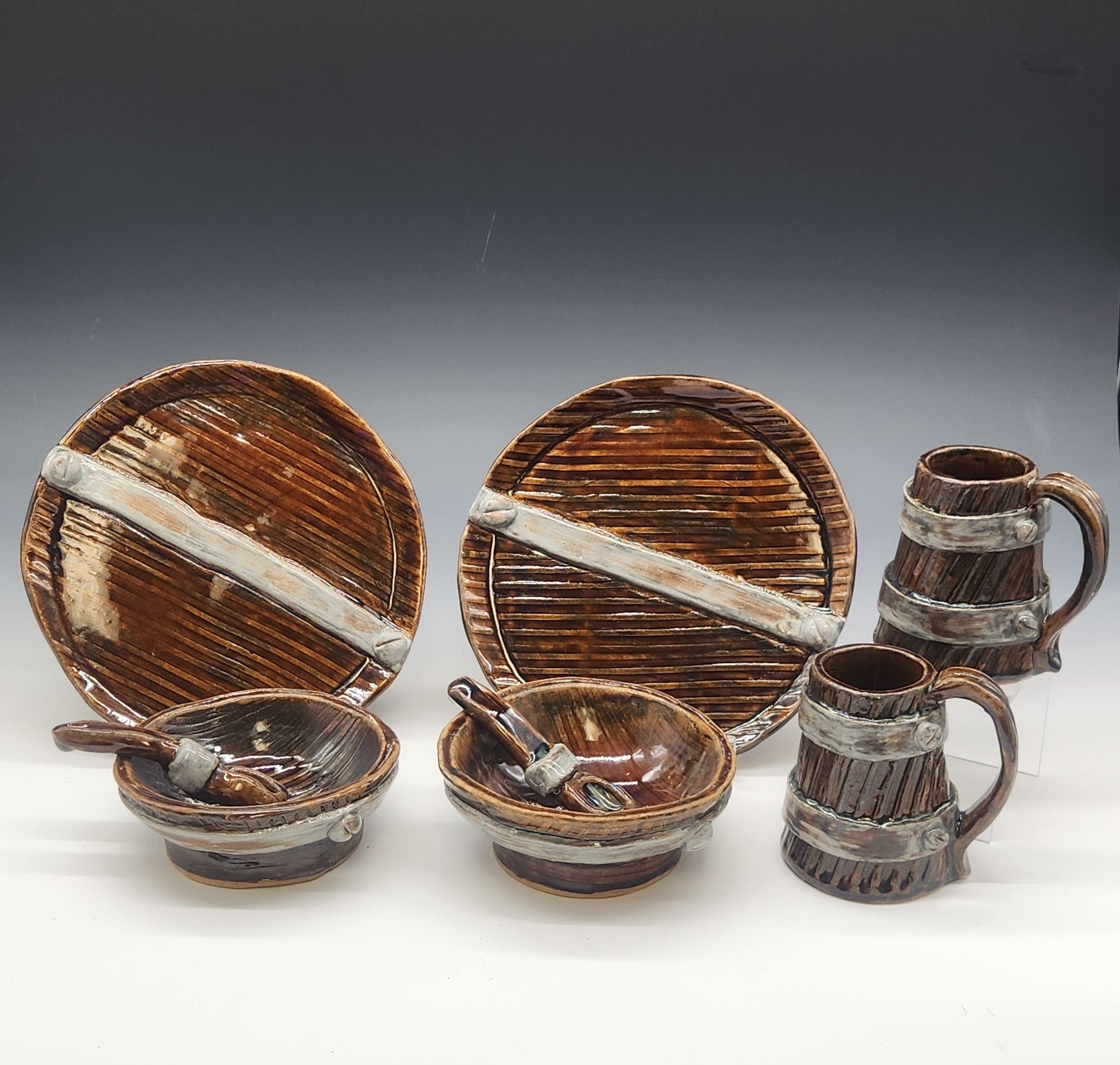
Textured Slab Sets with a Focal Accent (Ceramics II)
This project introduces kids to the concept of building with textured slabs and designing and creating a set of pieces that are unified by textures and focal accents throughout the set. Students will expand their already small but existing knowledge of working with slabs to include a plethora of options of forms and construction techniques.
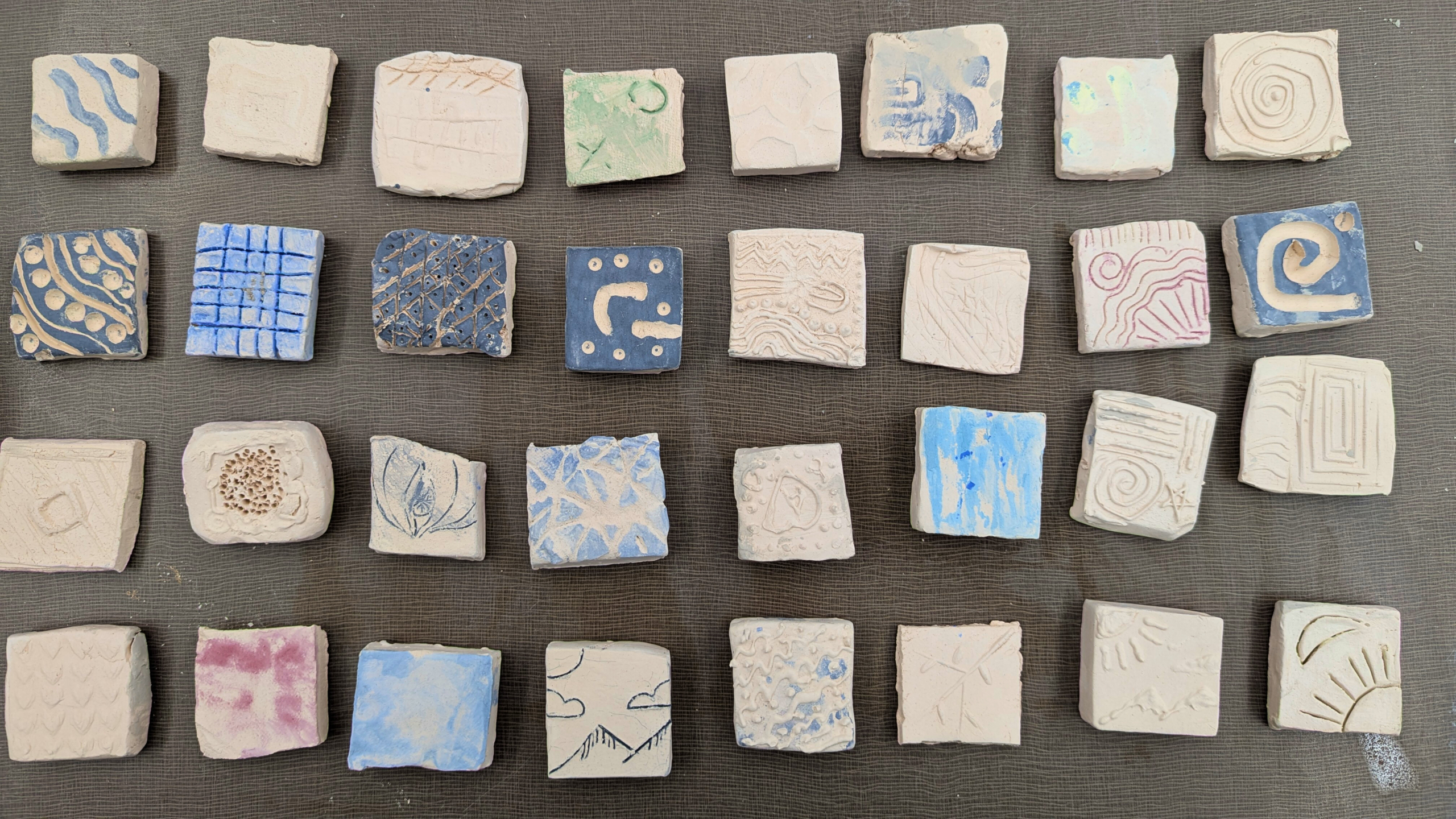
Advanced Surface Design
For my advanced students: How do we get students to push their skills and techniques to the next level? Explore and experiment with advanced surface design skills.
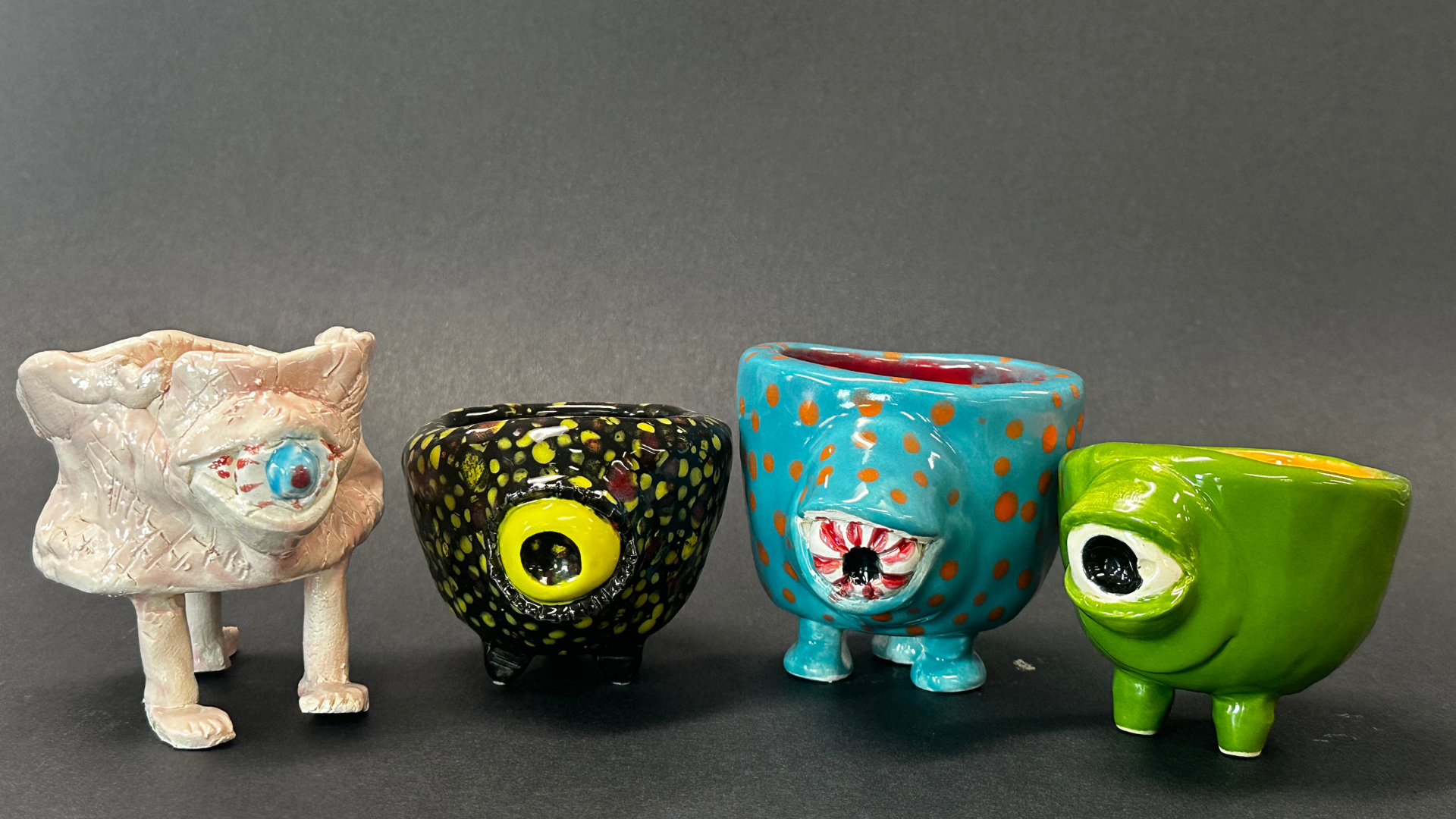
Eyeball Pinch Pot
The Eyeball Pinch Pot Project is my absolute go-to for beginner students. This project includes shaping, sculpting, attaching, and leaves room for creativity for overachievers. I use this project to embed critical knowledge in beginners so that they can go on to create bigger and better pieces!
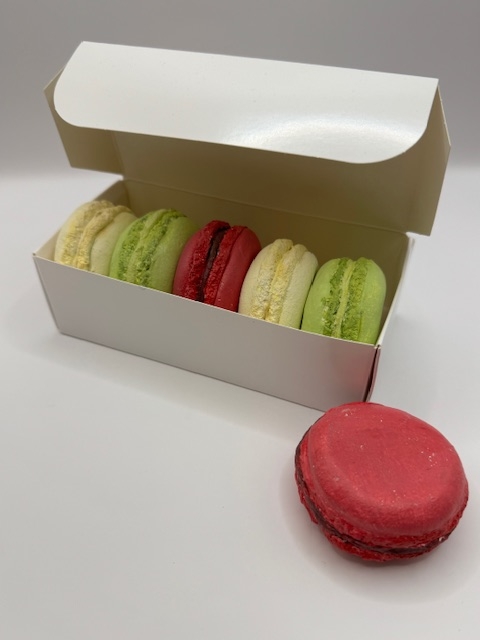
Is it Clay?
Plan and design a hyper-realistic clay sculpture that convincingly mimics an object from everyday life.
Use hand-building techniques (e.g., coil building, slab construction, carving, applied texture) to achieve realistic forms and textures. Apply appropriate surface treatments to create convincing details.
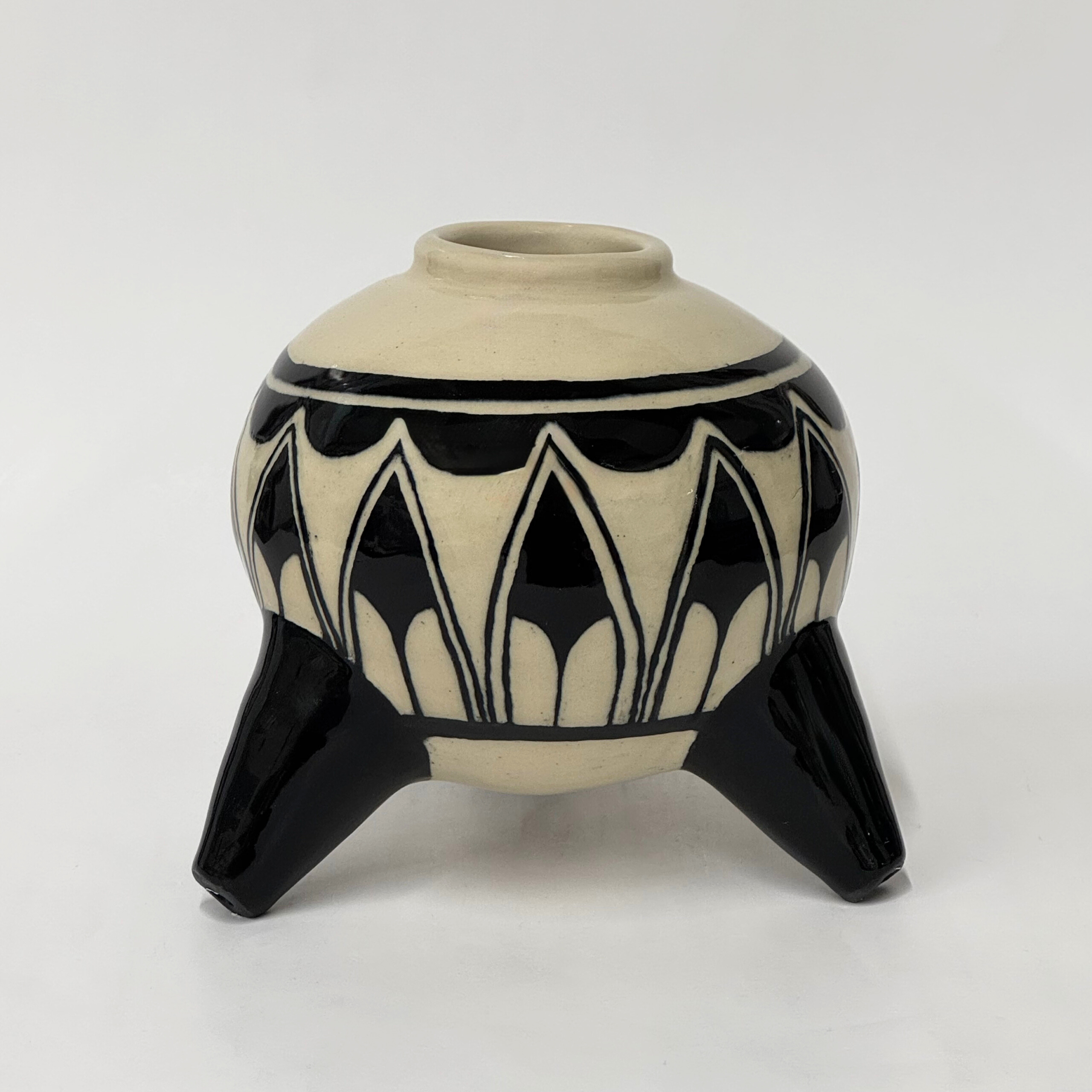
Sgraffito Vessels
Students can create a ceramic vessel using any method of construction and then finish the surface to illustrate a design using the sgraffito technique.
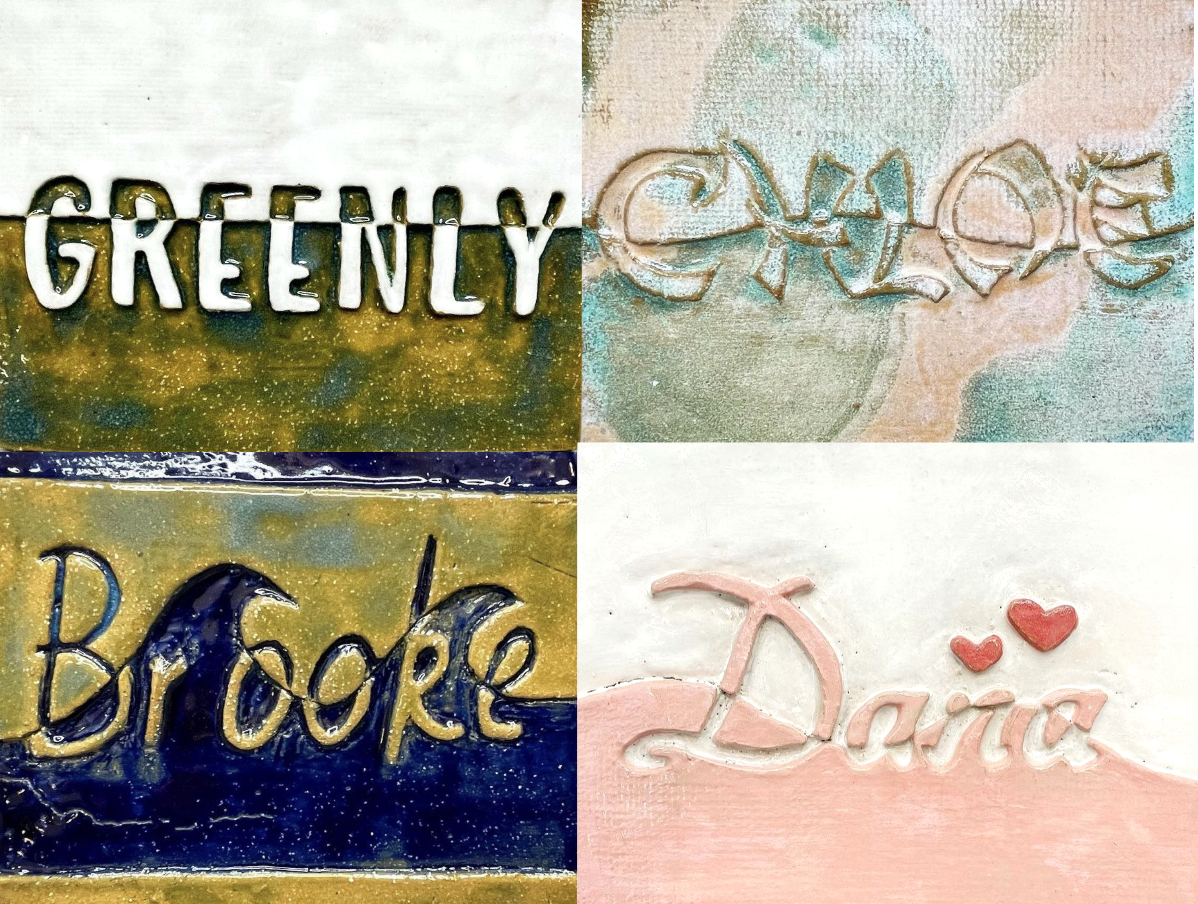
Personalized Name Tags
Students will create unique and personalized name tag using a 7” x 9” slab, transfer their name in a chosen font, divide it in half, and showcase contrast using high relief on one side and sunken relief on the other.
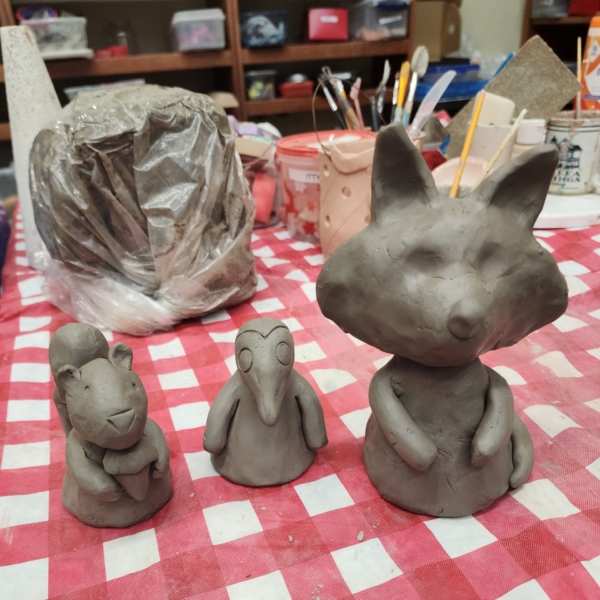
Animals
Students use pinch, slab, modeling, and combination handbuilding techniques to create animals with character. Students are encouraged to brainstorm a story about their animal, to help them decide what characteristics they want to embody in their piece.
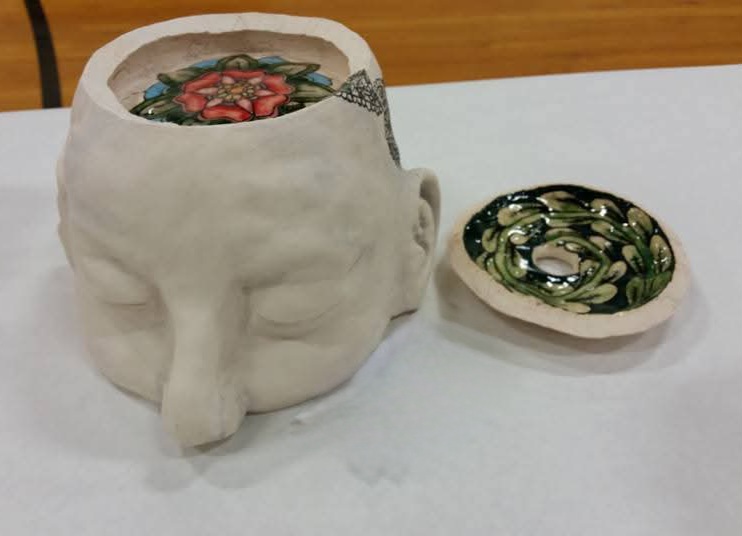
Environment Within
Environment Within is a project where students create a subject matter of their choice, and within that sculpture, they need to create a space of mystery or intrigue, something that will make the viewer want to look within, or at the piece for a more extended period of time.
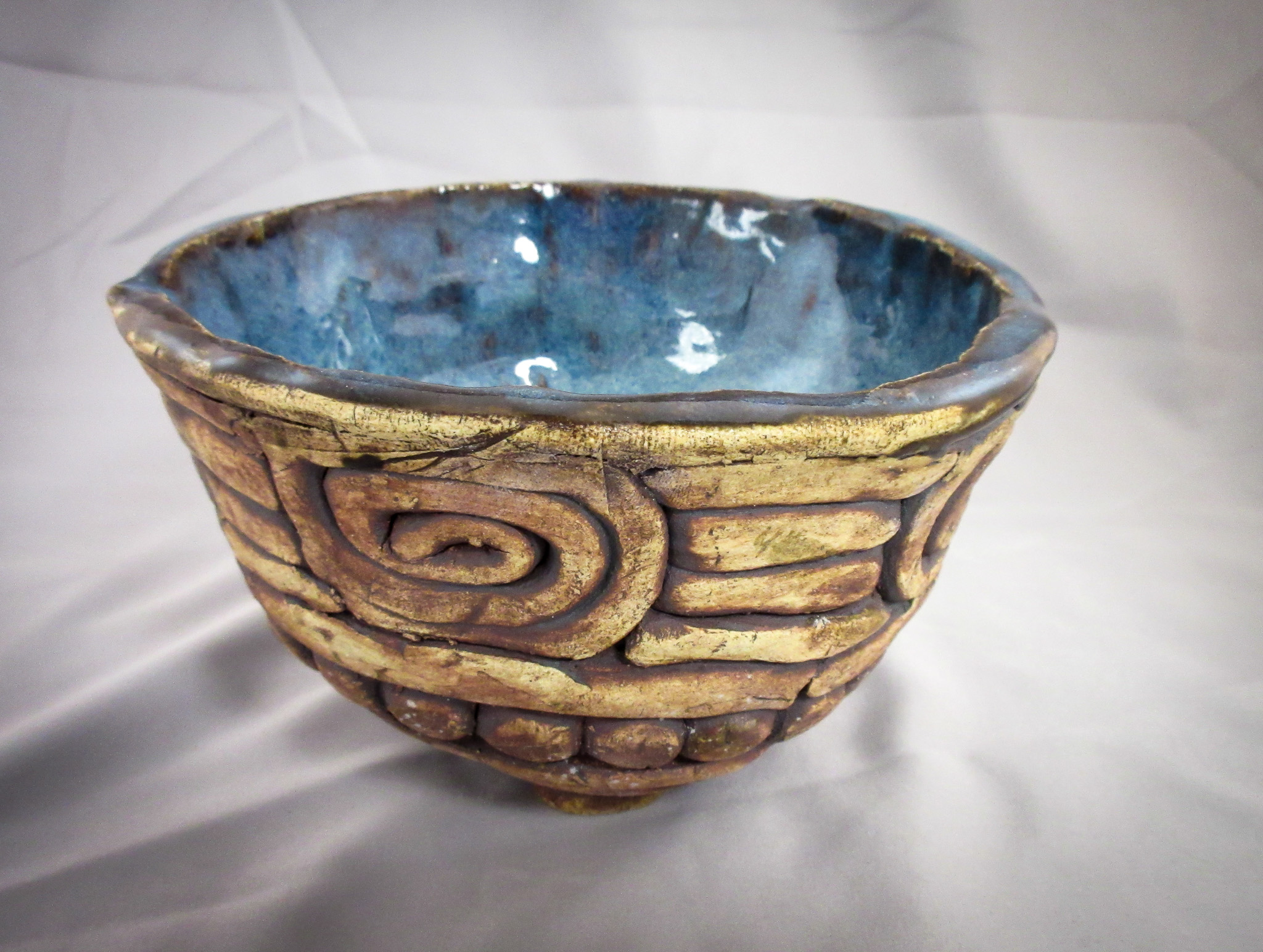
Texture coil bowl
Create a unique bowl using the coil method, where texture and design take center stage. The exterior showcases a decorative coil pattern, while the inside remains smooth for a functional finish. This project blends creativity with traditional hand-building techniques for a one-of-a-kind piece.
Sign up for Kids Need Clay email
Get fresh ceramics teaching resources delivered monthly.