
Get the Ball Rolling! (Dorodango)
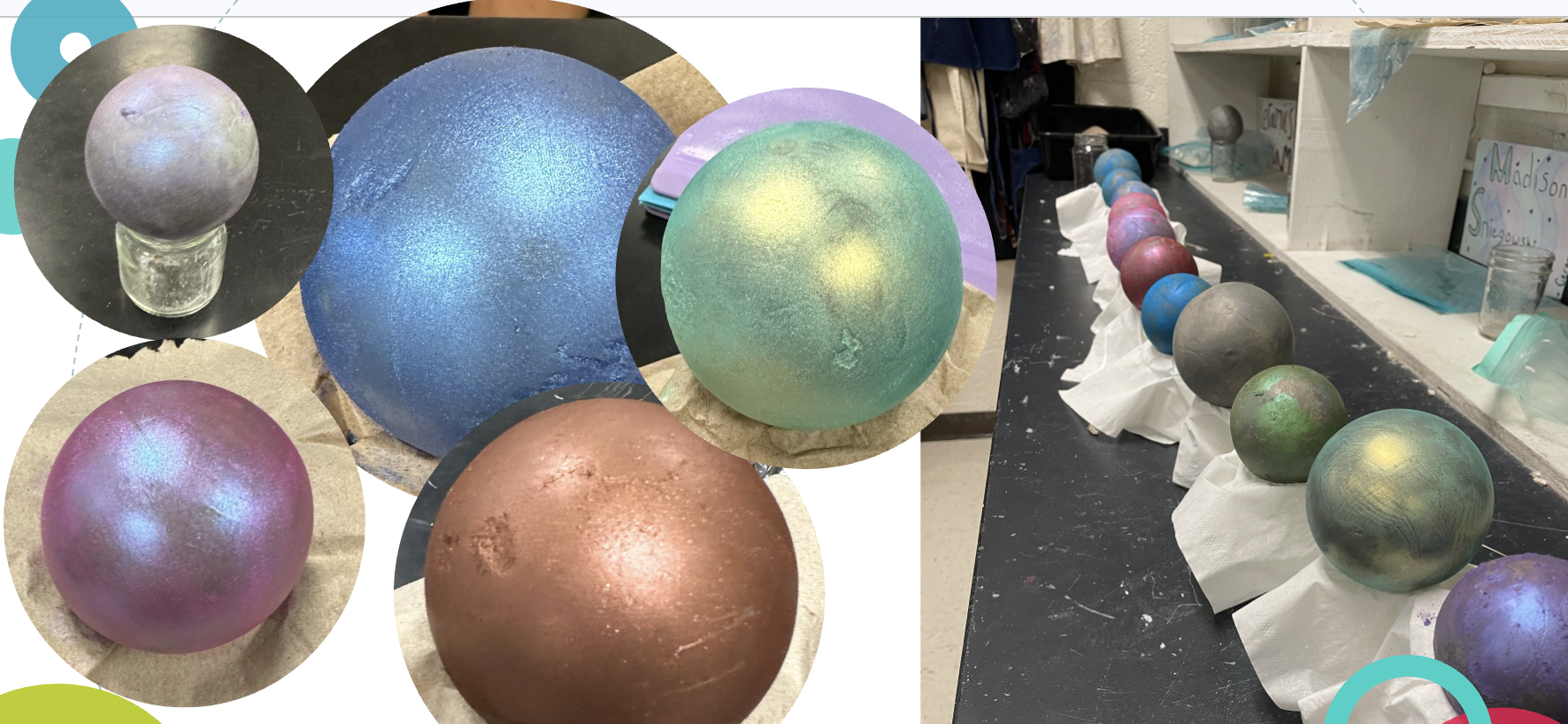
Meet The Teacher: Leeann McMichael
Hi! I'm Leeann, and I am in my 16th year of teaching! I currently am the secondary Visual Arts Teacher at Columbia Central Jr./Sr. High School in Brooklyn, MI! I love dressing up for Spirit Week, love technology in the art room, and am widely known for my Student Snack Drawer as well as my fun outfits!
Project Description
Dorodango is the Japanese art of making a sphere or marble out of clay. In this lesson, we are going to use recycled clay to create our pieces, showing sustainability as well as saving money! The clay dorodango is not fired in a kiln, and therefore can also be re-recycled.
Materials
- Dirt or sand (optional)
- Mica Powder (optional)
- Recycled Clay (wet is ok!!) and dry powdered clay
- Glass Jars (mason jars, yogurt jars, jelly jars, etc) in a variety of sizes
Grade Level
High School
Difficulty
Intermediate
Student Hands-On Time
3-5 class periods
Teacher Prep Time
15-20 minutes
Project Cost / Cost Per Student
5
National Core Arts Standards - Visual Arts
- Creating - Generate and conceptualize artistic ideas.
- Creating - Conceiving and developing new artistic ideas and work.
- Connecting - Relate artistic ideas to historical, cultural, and social contexts.
- Connecting - Connect personal experiences with artmaking and meaning.
21st Century Skills
- Critical Thinking & Problem-Solving
- Creativity & Innovation
- Flexibility & Adaptability
- Social & Cross-Cultural Skills
STEAM Education
- Science
- Engineering
- Arts
Differentiations and Accommodations
Differentiation
IEP
Accommodation
Students may be given more time or a different amount of clay if they struggle with timing.
Differentiation
504 Accommodations
Accommodation
Students may not like the texture/ feel of the wet clay, this can also be done with clay right from the box for those students, they would just not mix in sand or dirt and would skip the first step.
Differentiation
Struggling Learners
Accommodation
Students can be given one on one help, or can also be placed in partners or teams of students for support.
Differentiation
Advanced Learners
Accommodation
Students can be a mentor to struggling learners, or can also be given more clay to make multiple dorodango.
Learning Objectives: Knowledge
Students will be able to understand the process of making a dorodango, they will learn about a Japanese traditional art form, and will be able to learn how sustainability can be applied to an art project. Students will also be using unconventional materials (glass jars) as tools to create their pieces!
Learning Objectives: Skills
Mastery of physical properties, precision in geometric form, surface manipulation and refinement, craftsmanship
Learning Objectives: Attitudes/Values
Patience, persistence, trusting the process, respect for natural resources, mindfulness, work ethic and "takumi," the Japanese concept of precision through repetitive processes.
Formative Assessment
Students and teacher talk with each other during the process and constantly check moisture levels and smoothness of the sphere.
Summative Assessment
Students are graded based on a rubric consisting of 4 categories: Craftsmanship, Use of Class Time/ Productivity, Creativity (color placement) and Use of Elements.
Reflection and Discussion
Students should write/talk about their dorodango when it is finished. They can discuss the process, how it made them feel (was it relaxing? stressful?) and talk with other students about this as well.
Lesson Activities
Instruction
Students are shown a process video of the art of dorodango, as well as a slideshow with photos.
Hands on Learning
Students form a clay ball out of recycled clay, form a sphere using a variety of glass jars, add vaseline and mica powder (optional) for color, and use a small glass jar to buff and polish.
Present
Students display their pieces on top of a small jar
Step-by-Step Instructions
Step 1
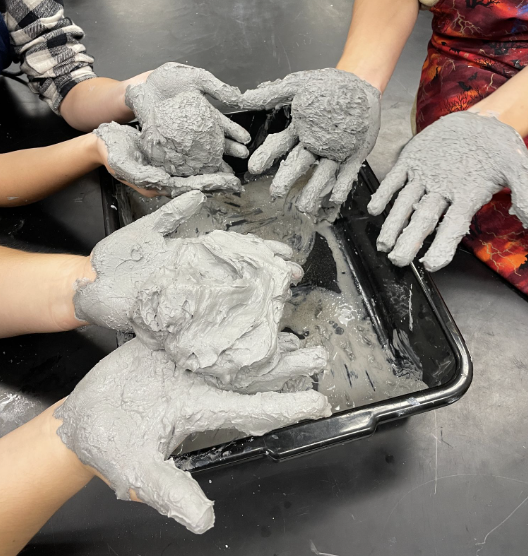
Dorodango (Japanese for “Mud Dumpling”) is an aesthetically pleasing artform where mud, clay, dirt, and other natural materials are compacted into a ball, and polished into a shiny decorative sphere.1) Start with leftover clay or recycled clay. 2) Add dry powdered clay. 3) Optional - Add dirt or sand as students are mixing ingredients together. (You can even put dirt into the mixture from a location significant to you!)
Step 2
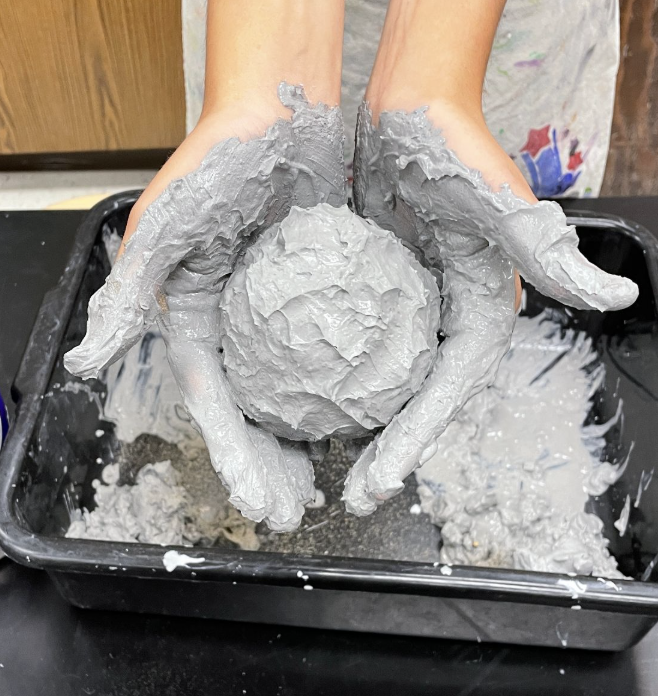
4) Clay, dirt, and other materials are mixed and formed into a ball.
Step 3
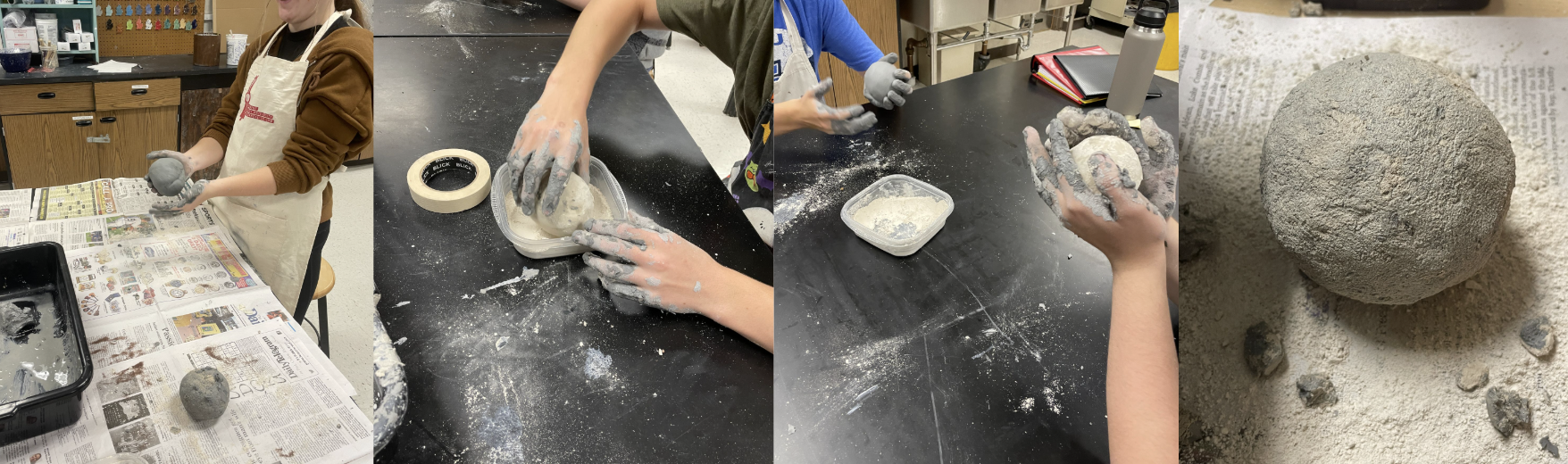
5) If they are still very sticky, roll in dry, powdered clay to coat the surface. (We store our dorodango on glass jars so they don’t get flattened while drying. )
Step 4
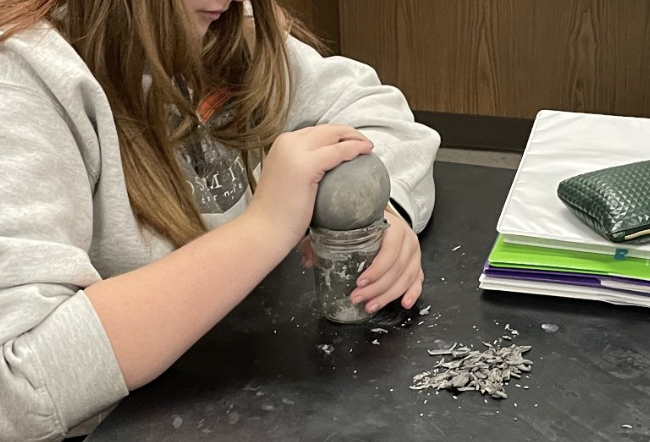
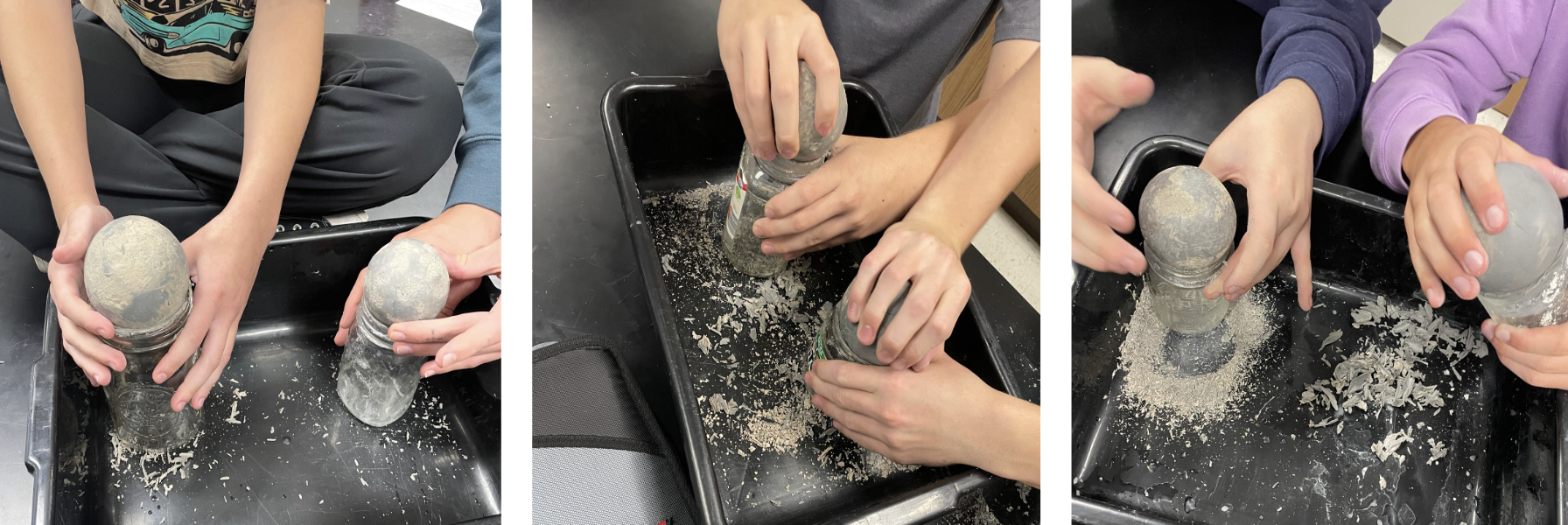
8) We are going to take our larger of the two jars and set the ball of clay onto it. With the clay ball on the lip of the jar, press down and roll the ball in all directions. This will “shave” the outer layers of the clay into a sphere! This will take a little bit of time; slow and steady makes the dorodango rounder! It is inevitable that you will have some pits and divots in your surface, this is part of what makes each one unique! 9) Once the dorodango has been shaped into a sphere, we will set it out to try a little more!
Step 5
10) We will add some vaseline to the surface of our new ball and rub the vaseline in using a piece of felt. This will seal the dry clay in a bit and start the polishing process. 11) We are going to cover the surface with mica powder! It will not look like this when we are done, we will be removing most of the color and marbling it during the next stage. 12) Use the small jar again to buff/ polish the surface of the ball! It will take off some of the color and you can always add another layer of vaseline and mica powder!
Additional Documents
Follow Us:


