
Rose B. Simpson – Dream Houses
Meet The Teacher: Sadie Figueroa
My name is Sadie Figueroa, and I teach at Goulds Elementary, a Title I school in Homestead within Miami-Dade County Public Schools. As a member of the Ceramic League of Miami, I believe students of all ages deserve access to clay and meaningful ceramic experiences.
Project Description
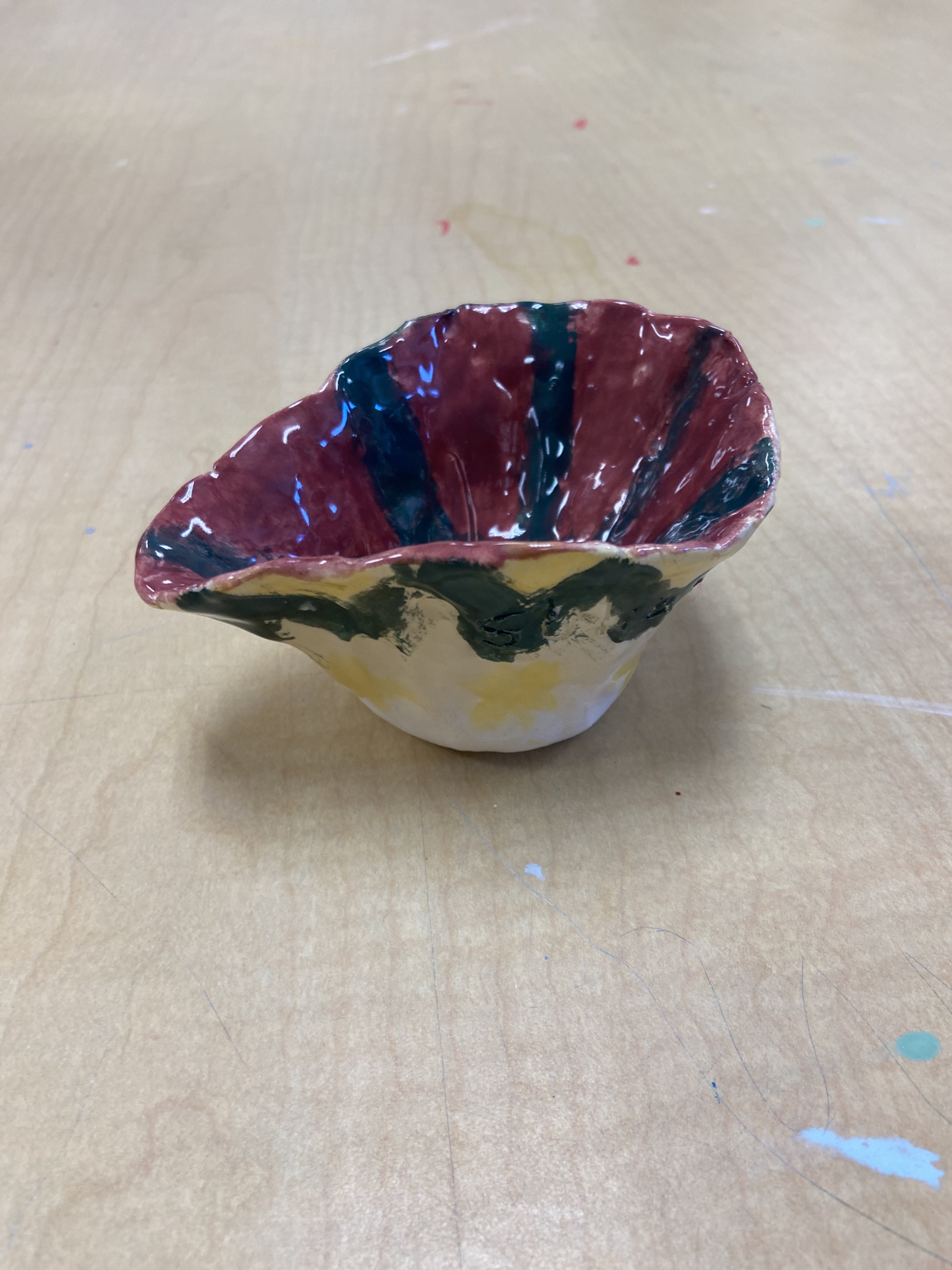
Students create ceramic “Dream House” sculptures inspired by the work of Rose B. Simpson, exploring how artists use symbols to connect personal identity and cultural heritage.
Materials
- Session 1: Low-fire red clay, clay tools, 1-2 paper towels per student Session 2: Student bisqueware, 1-2 brushes per student, 3 low-fire color glazes per class, 1-2 paper towels per student, 1 palette per student
Grade Level
Elementary School
Difficulty
Easy
Student Hands-On Time
40
Teacher Prep Time
30
Project Cost / Cost Per Student
25
Differentiations and Accommodations
Differentiation
IEP
Accommodation
Instruction will be adapted to support diverse learning needs by:Demonstrating each step of the ceramic process with visual modeling and examplesBreaking tasks into clear, manageable stepsProviding visual references and symbol examples for inspirationOffering additional assistance with clay manipulation or brush controlAllowing students to express their reflections verbally or through drawing if writing is challengingStructured routines for materials, work time, and cleanup will help maintain an organized and supportive learning environment.
Learning Objectives: Knowledge
By the end of the lesson, students will understand that artists use symbols, materials, and color to communicate personal ideas and cultural identity. Students will learn how contemporary artist Rose B. Simpson incorporates symbolism rooted in her Pueblo heritage while also imagining new forms such as her Dream Houses. Students will also understand the stages of the ceramic process, including greenware, bisque firing, and glazing, and how glaze transforms clay into a finished ceramic artwork.
Learning Objectives: Skills
Students will develop both technical ceramic skills and creative thinking skills, including:
Constructing forms using the pinch pot clay technique
Adding sculptural elements and personal symbols to clay forms
Applying glaze using proper ceramic techniques (multiple thin coats)
Planning artistic choices through sketching and discussion
Explaining artistic decisions and reflecting on meaning in their artwork
These skills support students in creating a finished ceramic sculpture that communicates personal ideas through form and color.
Learning Objectives: Attitudes/Values
Students will develop an appreciation for:
Creative expression and personal storytelling through art
Respect for cultural heritage and artistic traditions
Patience and persistence during the multi-step ceramic process
Care and responsibility when using art materials and tools
Confidence in sharing and discussing artistic ideas
Students will also recognize that art can be a way to connect personal identity, imagination, and culture.
Formative Assessment
Student understanding will be monitored throughout the lesson through:Observation of students during the clay construction and glazing processReview of student sketches and symbolic planning before glazingQuestioning and discussion during the lesson about symbolism and artistic choicesStudent participation in pair-share reflection activitiesStudents will also complete a brief exit ticket explaining how their symbols and color choices contribute meaning to their Dream House sculpture.
Summative Assessment
Students will be assessed based on the completed ceramic Dream House sculpture and their ability to explain the meaning behind their artistic choices.Assessment criteria include:Successful construction of a ceramic form using pinch techniquesInclusion of personal symbols or meaningful design elementsProper glaze application and craftsmanshipStudent ability to describe the inspiration and symbolism in their artworkStudents will also participate in a short class critique, discussing how form, color, and symbols communicate ideas in their sculptures.
Reflection and Discussion
Discussion prompts may include:
How did the work of Rose B. Simpson inspire your Dream House sculpture?
What personal symbols did you include in your sculpture, and what do they represent?
How do your color choices help communicate meaning in your artwork?
In what ways can artists combine traditional techniques with new ideas to create something original?
How might an artist’s culture, heritage, or personal experiences influence the artwork they create?
How did your sculpture change from the clay stage to the finished glazed piece?
Students will share their responses during pair-share discussions and a brief class critique, encouraging thoughtful reflection, respectful listening, and appreciation for diverse artistic ideas and cultural perspectives.
Lesson Activities
Rose B. Simpson- Dream Houses
Students will explore the artwork of Rose B. Simpson through selected clips from Art21 and class discussion about symbolism, heritage, and imagination.Students will first construct their own ceramic “Dream House” sculptures using traditional pinch pot techniques, shaping clay forms and adding personal symbols inspired by their identities, families, and experiences. After the sculptures are bisque fired, students will apply glaze to complete their work, using color intentionally to enhance meaning and visual impact.Throughout the lesson, students will reflect on how artists combine traditional techniques with contemporary ideas to create meaningful works of art.
Step-by-Step Instructions
Step 1
1. Introduction and Inspiration (10 minutes) Students view selected clips from Art21 featuring the work of Rose B. Simpson and her Dream Houses. The teacher leads a brief discussion about how Simpson uses symbolism connected to her Pueblo heritage and imagination to create meaningful sculptures.
Step 2
2. Brainstorming Personal Symbols (5–10 minutes) Students discuss examples of symbols and what they represent. They brainstorm and sketch ideas for symbols that represent their own identities, families, dreams, or communities.
Step 3
3. Planning the Sculpture (10 minutes) Students sketch their “Dream House” design in their sketchbooks. They plan the shape of their house and where their personal symbols will be placed.
Step 4
4. Clay Construction (30–40 minutes) Using low-fire clay, students create a small house form using the pinch pot technique. They refine the structure and attach additional clay elements to represent their personal symbols and design details.
Step 5
5. Drying and Bisque Firing Completed sculptures dry to the bone-dry stage and are then bisque fired in the kiln to prepare them for glazing.
Step 6
6. Glaze Planning (5–10 minutes) Students review glaze color charts and plan what techniques and/or methods to use to enhance the symbolism in their sculpture using the (3) chosen classroom color glazes.
Step 7
7. Glazing the Sculpture (30–40 minutes) Students clean their bisque-fired pieces and apply two to three thin coats of glaze, being careful not to glaze the bottom of the sculpture.
Step 8
8. Final Firing Glazed sculptures are fired in the kiln to complete the transformation from clay to finished ceramic artwork.
Step 9
9. Reflection and Group Discussion (10 minutes) Students participate in a brief reflection and discussion, sharing the meaning of their symbols and how their sculpture was inspired by Rose B. Simpson’s work.
Additional Documents
Follow Us:


