
The Sculptor’s Journey
Meet The Teacher: Rodney King Lisondra
I am "Mr. King" known by my students and colleagues teaching at Mesa View Elementary in Grants, NM, I specialize in integrating STEAM and technical pedagogy into the elementary art curriculum. I strive to empower my students through Choice-Based instruction, turning every clay project into a journey of discovery and personal expression. c",)
Project Description
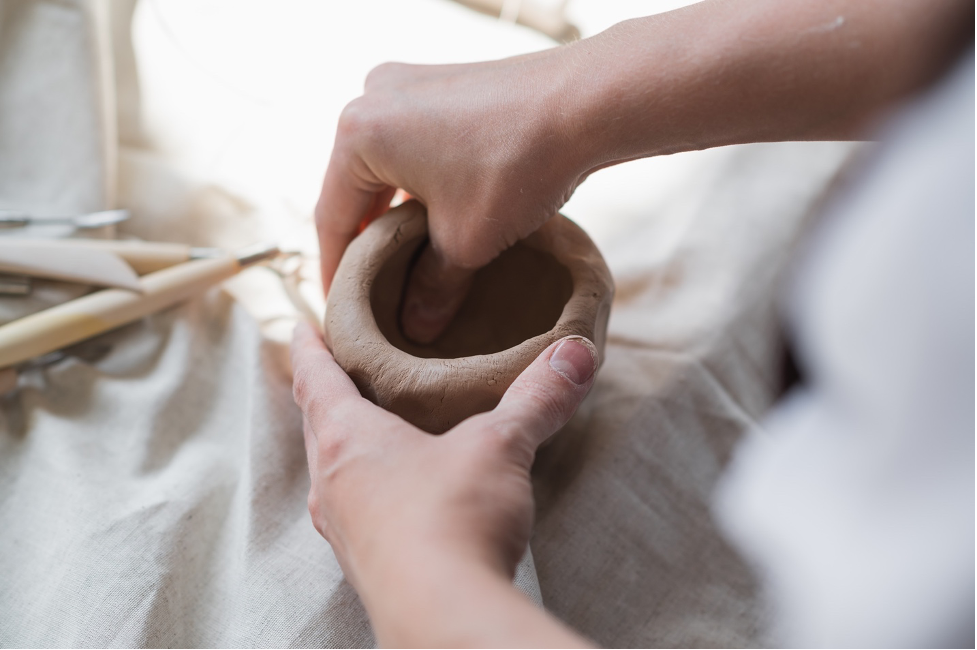
Students at Mesa View ES explore the tactile world of clay through a scaffolded journey of discovery aligned with National and NM Core Arts Standards. By blending Choice-Based inquiry with rigorous technical rubrics, "The Sculptor’s Journey" ensures every student, regardless of skill level, achieves mastery in the ancient art of the pinch pot.
Materials
- Ceramic Clay (Air-Dry Clay Alternative) and Clay tools for decoration.
Grade Level
Elementary School
Difficulty
Intermediate
Student Hands-On Time
160 minutes
Teacher Prep Time
120 minutes
Project Cost / Cost Per Student
30
National Core Arts Standards - Visual Arts
- Creating - Generate and conceptualize artistic ideas.
- Creating - Conceiving and developing new artistic ideas and work.
- Responding - Perceive and analyze artistic work.
- Connecting - Relate artistic ideas to historical, cultural, and social contexts.
21st Century Skills
- Critical Thinking & Problem-Solving
- Creativity & Innovation
- Communication
- Media Literacy
- Initiative & Self-Direction
- Social & Cross-Cultural Skills
- Productivity & Accountability
STEAM Education
- Science
- Technology
- Engineering
- Arts
- Mathematics
Differentiations and Accommodations
Differentiation
IEP
Accommodation
Tiered Differentiation Strategy1. The "Advanced" Tier (Gifted & Talented / High Mastery) Focus: Complexity, Conceptual Depth, and Technical Precision The Challenge: Double-Pinch Pot Construction. Instead of one vessel, these students must create two matching pinch pots and "weld" them together to create a hollow sphere or "egg." Technical Goal: They must incorporate a "vent hole" (to prevent explosion in the kiln) disguised as a sculptural element. Cognitive Extension: Ask them to incorporate Metaphor. "If your vessel represents a 'Corner' style, how can you change its shape to represent an emotion?" Standard: VA:Cr3.1.6a (Refining and completing artistic work).2. The "Regular" Tier (Grade Level Mastery) Focus: Structural Integrity and Functional Addition The Challenge: The Modified Vessel. Students create a standard pinch pot but must add at least two "attachments" (a handle, a foot, or decorative sprigs). Technical Goal: Master the Score, Slip, Press, Smooth technique to ensure no pieces fall off during the drying process. Cognitive Extension: Focus on Symmetry. "Can you make the left side of your vessel a mirror image of the right?" Standard: VA:Cr2.1.4a (Demonstrating quality craftsmanship).3. The "Low/Support" Tier (Emerging Skills / IEP / Sensory Needs) Focus: Fine Motor Success and Basic Form The Challenge: The "Seed" Bowl. Focus entirely on the "Butterfly Pinch" and maintaining a "Goldilocks" thickness (not too thin, not too thick). Support Tools: Provide Pinch-Pot Templates (small wooden spheres or balls) for students to mold around if they struggle with manual "centering." Sensory Modification: If a student is sensitive to the "dry" feeling of clay, provide a small sponge and extra slip to keep the surface "creamy" and manageable. Standard: VA:Cr2.2.Ka (Identifying and using art tools safely).
Learning Objectives: Knowledge
The following standards are applied across the K–6 spectrum, with increasing complexity in the "Elaborate" phase:VA:Cr2.2 (Creating - Investigate): * NM Emphasis: Demonstrate safe and proper procedures for using clay tools and kilns. Ensure "Quality Craftsmanship" is treated as a form of respect for the material and the community.By the end of this lesson, students will be able to:
- Cognitive (Synthesis/Create): Design a unique ceramic vessel that translates a 2D inspiration from the 4-Corners activity into a 3D form.
Learning Objectives: Skills
The following standards are applied across the K–6 spectrum, with increasing complexity in the "Elaborate" phase:VA:Cr1.1 (Creating - Investigate/Plan/Make): * NM Emphasis: Generate and conceptualize artistic ideas by connecting them to personal or local New Mexico environments (e.g., using the "Naturalist" corner to discuss high-desert textures).By the end of this lesson, students will be able to:
- Psychomotor (Mechanism/Guided Response): Construct a structurally sound pinch pot with consistent wall thickness and secure "Score & Slip" attachments.
Learning Objectives: Attitudes/Values
The following standards are applied across the K–6 spectrum, with increasing complexity in the "Elaborate" phase:VA:Cn11.1 (Connecting): * NM Emphasis: Relate artistic ideas and works with societal, cultural, and historical context to deepen understanding. (Connecting the "Pinch Pot" to the long history of pueblo pottery in New Mexico).By the end of this lesson, students will be able to:
- Affective (Valuing/Organizing): Defend their aesthetic choices during the 4-Corners reflection and peer-review process.
Formative Assessment
"Exit ticket" See attached lesson plan.
Summative Assessment
See the "rubrics" on the lesson plan submitted.
Reflection and Discussion
K–1: Focus on the "Seed" pot (smoothness and shape). Focus: Fine motor skills and uniform wall thickness. Task: Create a simple, rounded sphere. Use the "thumb-press and "butterfly-pinch" (using pointer finger and thumb) to create a small bowl. Challenge: Can you make the rim as smooth as a river stone? 2–4: Focus on adding a functional handle or footed base.Focus: Height, stability, and "Score & Slip" attachments. Task: Create a deeper pinch pot. Once the base is formed, students must add a "functional" element (a handle, a footed base, or a lid) using the Score, Slip, Press, and Smooth method. Challenge: Can you manipulate the walls to be thin enough to be light, but thick enough to stand?5–6: Focus on the "Double-Pinch" hollow form or intricate surface narrative.Focus: Combined forms and surface Narrative. Task: Double-Pinch Pot Construction. Students create two identical pinch pots and join them at the rims to create a hollow "egg" or "orb." They then cut into the form or add external sculptural elements. Challenge: Transform the hollow form into a creature or a complex geometric sculpture.
Lesson Activities
Introduce the four "Inquiry Corners" (Naturalist, Architect, Storyteller, Abstractist). Students move to the corner that matches their "Artist Persona" for the day. Corner 1 (The Naturalist): Organic shapes (nests, seed pods, shells). Corner 2 (The Architect): Geometric, structured, or symmetrical vessels. Corner 3 (The Storyteller): Pinch pots transformed into characters or animals. Corner 4 (The Abstractist): Texture-heavy, non-functional, "rule-breaking" forms.
4-Corners Activity
Step-by-Step Instructions
Step 1
See attached lesson plan.
Additional Documents
Follow Us:


