
Clay Creature Bobbleheads
Meet The Teacher: Amanda Youngblood
I am an art educator in Alabama where I teach visual arts to 3rd - 6th grade. I create two clay projects that take only one day each to make with my 3rd and 4th grades. Since I see my 5th and 6th graders daily for an entire quarter, we are able to explore more in depth clay projects that take more time to complete. Kids need and LOVE clay!
Project Description
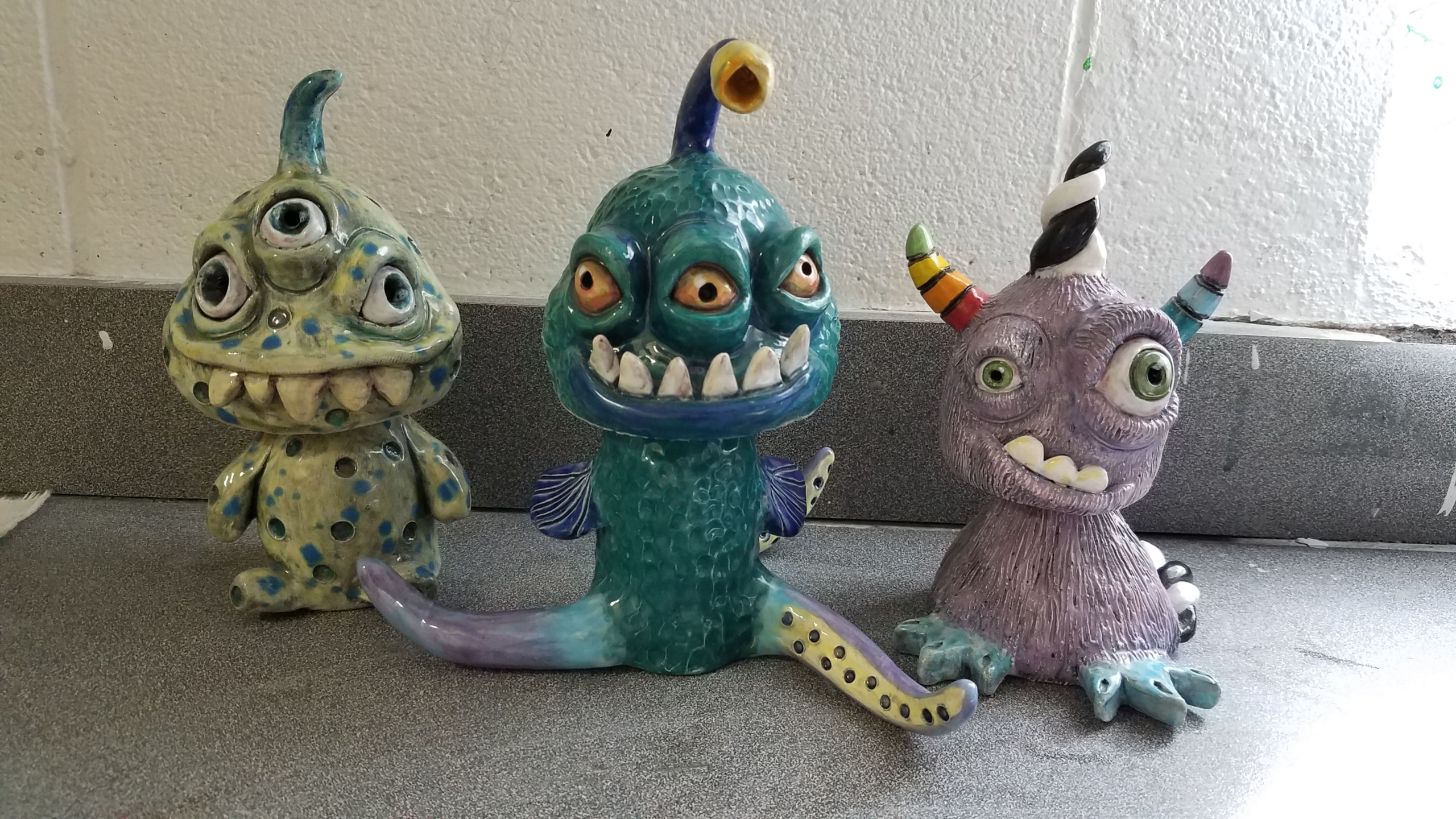
Students will create an imaginary clay creature bobblehead that could dwell within a real environment. The creature should be designed so that it could exist within this habitat. Students will research selected environment, including climate and species. Students will apply traditional hand building techniques to create their final project.
Materials
- Low fire clay, low fire glazes (SAX Gloss Glaze), needle tool or paper clip, metal rake tool or piece of a plastic comb, wooden blending tool or plastic spoon
Grade Level
Middle School
Difficulty
Intermediate
Student Hands-On Time
750 minutes
Teacher Prep Time
30 minutes
Project Cost / Cost Per Student
8
National Core Arts Standards - Visual Arts
- Creating - Generate and conceptualize artistic ideas.
- Creating - Organize and develop artistic work.
- Creating - Conceiving and developing new artistic ideas and work.
- Presenting - Select, analyze, and interpret works for presentation.
- Presenting - Develop skills for artistic presentation and exhibition.
- Responding - Perceive and analyze artistic work.
- Responding - Interpret intent and meaning in artwork.
- Responding - Evaluate and critique based on aesthetic and technical qualities.
- Connecting - Relate artistic ideas to historical, cultural, and social contexts.
- Connecting - Connect personal experiences with artmaking and meaning.
21st Century Skills
- Critical Thinking & Problem-Solving
- Creativity & Innovation
- Communication
- Collaboration
- Information Literacy
- Flexibility & Adaptability
- Initiative & Self-Direction
- Social & Cross-Cultural Skills
- Productivity & Accountability
- Leadership & Responsibility
STEAM Education
- Science
- Arts
Differentiations and Accommodations
Differentiation
504 Accommodations
Accommodation
Students may partner for classmates to research an environment together. Or teacher may provide an environment with details for that student(s). Depending on student physical abilities teacher may have to create pinch pots in a hand over hand method or help roll coils for students to attach, etc.
Learning Objectives: Knowledge
Students will understand and be able to apply basic hand-building techniques in clay such creating pinch pots, rolling coils, creating small slabs, and attaching clay properly using the score, slip, and smear process. Students will have an understanding of the importance of keep large clay pieces hollow and that clay requires ample time to dry before firing in the kiln. Students will have a basic understanding of glaze application.
Learning Objectives: Skills
Students will acquire or increase knowledge of creating pinch pots, rolling coils, creating small slabs, and attaching clay properly. Students will learn how to properly use clay tools whether conventional such as purchased tools or unconventional such as using low cost items like paper clips, combs, and forks.
Learning Objectives: Attitudes/Values
Clay require a can-do attitude. Things may not always go as planned and we may need to pivot or adjust ideas. One does not have to be completely committed to their original sketch as things may need to change due to time or student ability. Students will need to work diligently daily to complete the project and should focus on originality rather than copying a character. That when doing the environment research for designing their character that must actually use a resource like online version of Encyclopedia Britannica rather than what the AI generated info provides.
Formative Assessment
Teacher will monitor student productivity daily and meet with each table group daily to check for understanding. Teacher will also provide whole class, small group, or one-on-one demos for students who have same or similar questions on "how to do" something specific.
Summative Assessment
Students will fill out a rubric based on their own perceptions of their project. Teacher will also fill out the same rubric for evaluations. Students will participate in a class wide discussion of their work. Teacher may also assign a peer helper to remind classmate of steps and proper attachment methods.
Reflection and Discussion
What and where is your environment of choice for your creature?Why did you choose this environment?Please explain some of the traits present on your creature. How do these features help your creature survive in it's habitat.What would you do the same if you had to make this project again? What would you do differently?
Lesson Activities
Research and Sketching
Students will begin this project by researching an environment of either their choice or teacher direction. They will then sketch and concoct an imaginary creature that could inhabit this environment based on their research. Students will create three sketches of their creature giving a front, side, and back view.
Creating in clay
Students will then create their creature in clay applying handbuilding techniques starting with pinch pots, adding a tapered coil for the neck, and then adding facial features and details to the body. Students will use their completed handout and sketches for reference.
Step-by-Step Instructions
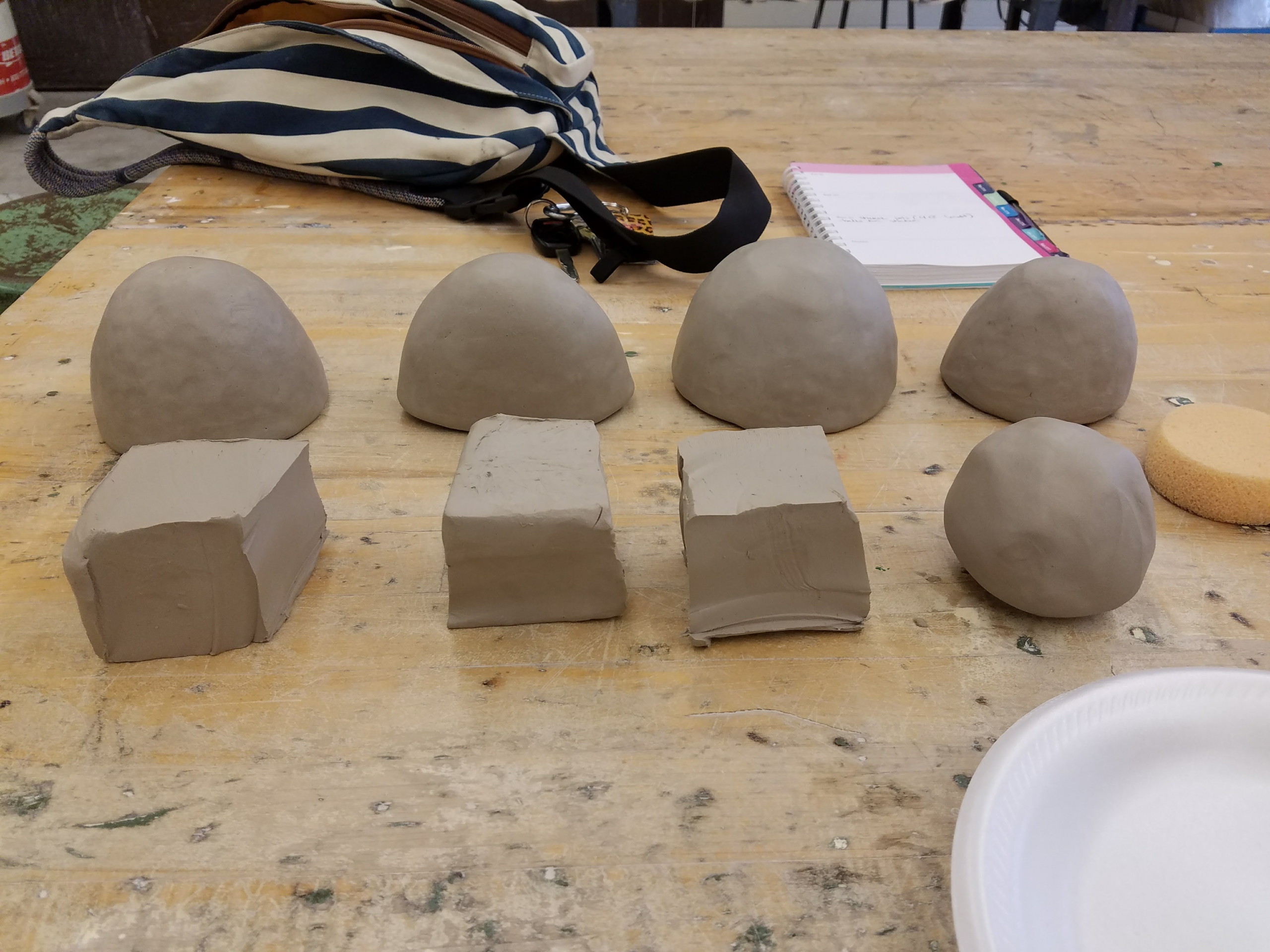
Step 1
Demonstrate how to create a pinch pot
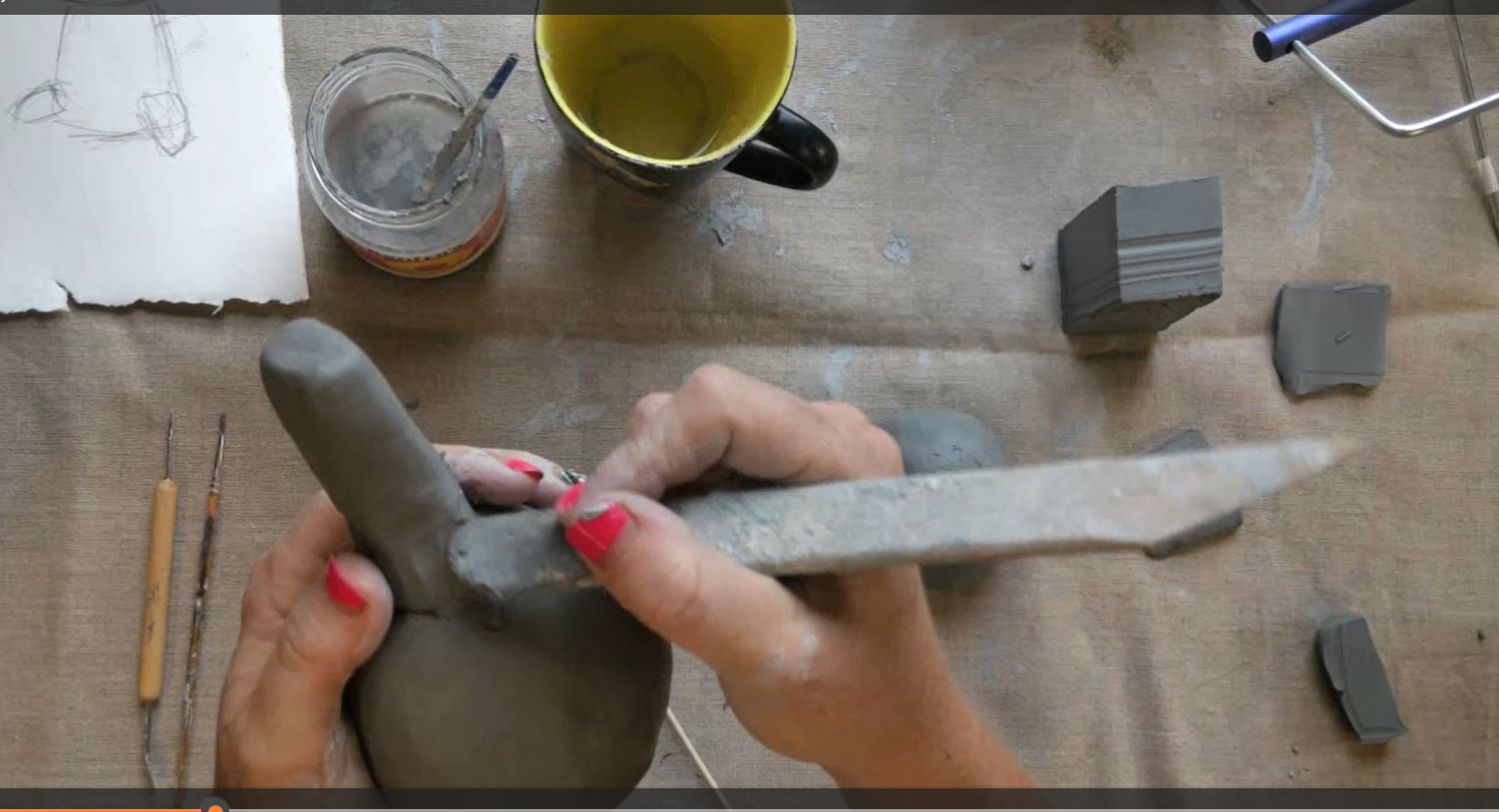
Step 2
Demonstrate how to add tapered clay coil neck
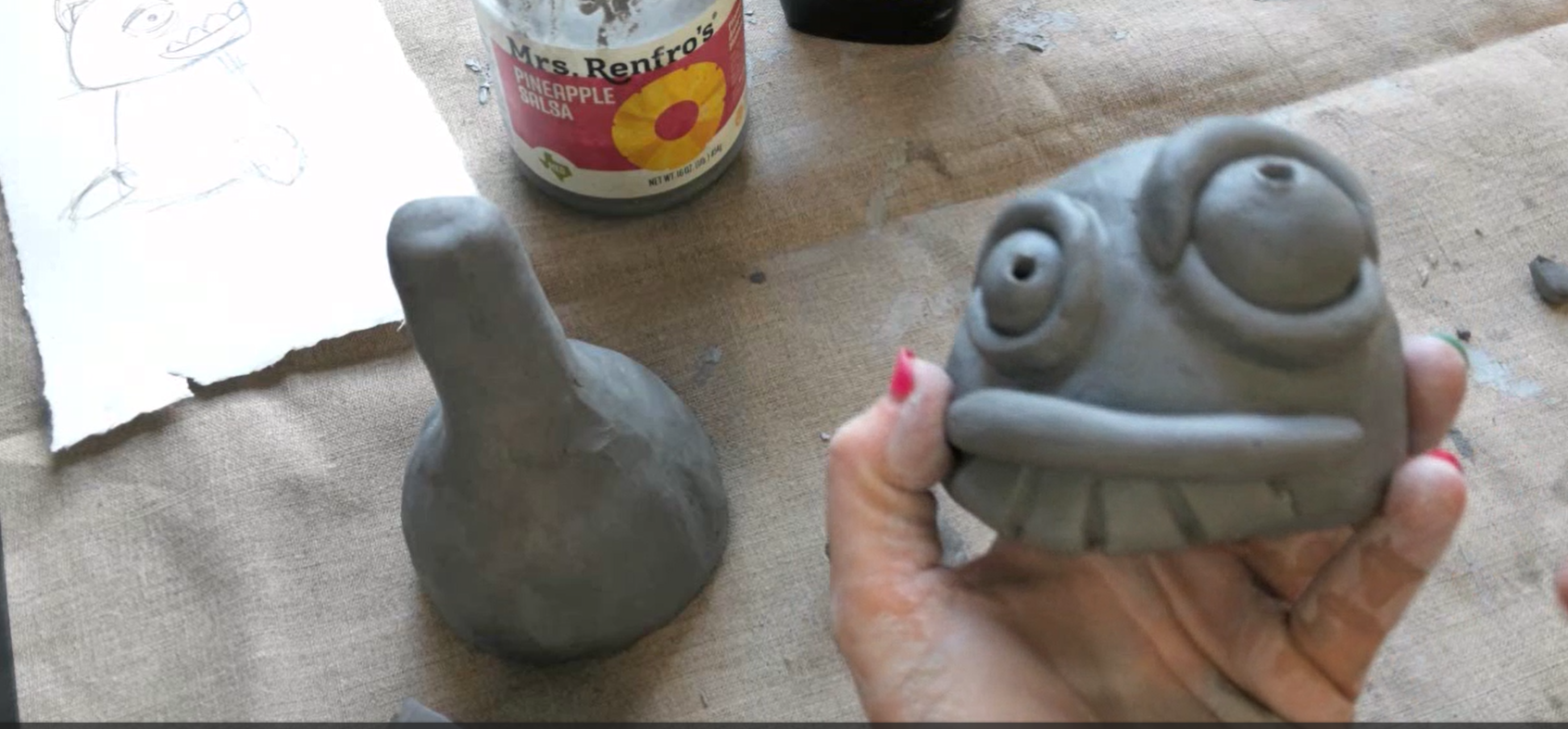
Step 3
Demonstrate how to start adding facial features and details
Follow Us:


