
Grants & Fundraising Survey Highlights
Thanks to everyone who took our 2025 Grants & Fundraising Survey! Your feedback gave us a clear picture of what ceramics teachers are dealing with right now — what’s working, what’s hard, and where support is needed most. This information will help shape our planning for 2026.
Half received grants, half didn’t
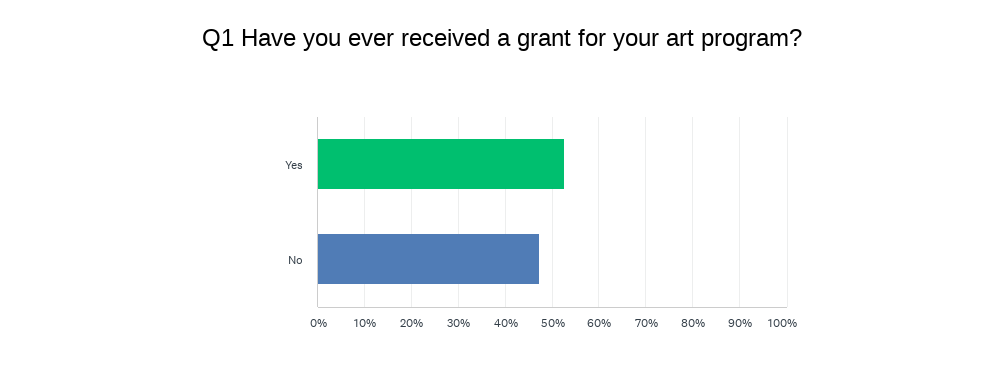
53% of teachers have received a grant for their art program, while 47% have not.
In the follow-up question, teachers were asked what grants they received and who provided them. Responses revealed a wide range of support—from local education foundations, PTSA groups, and community organizations to state arts councils and corporate sponsors.
Grants were most commonly used for art supplies, pottery wheels, kilns, glazes, professional development, and special projects such as sculpture units, art camps, and collaborative programs. Platforms like DonorsChoose also played a significant role, along with contributions from businesses and cultural organizations. Overall, these grants focused on enhancing classroom resources and expanding creative opportunities for students.
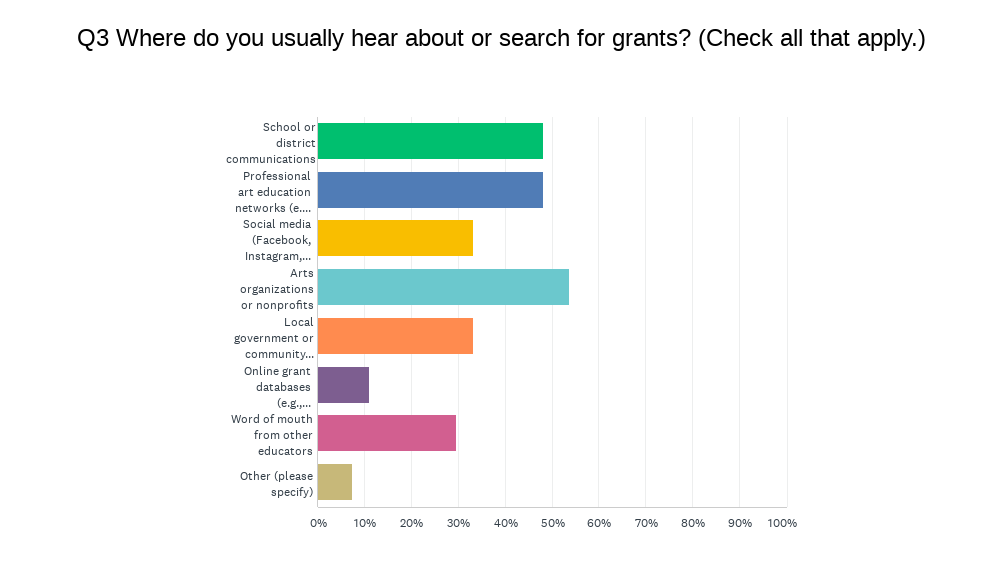
How teachers hear about grants
Top challenges for teachers
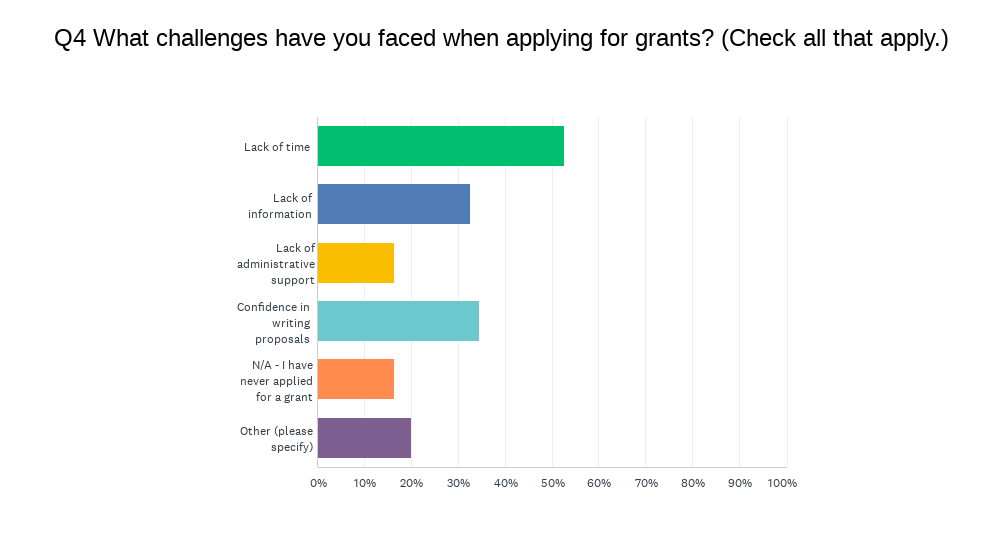
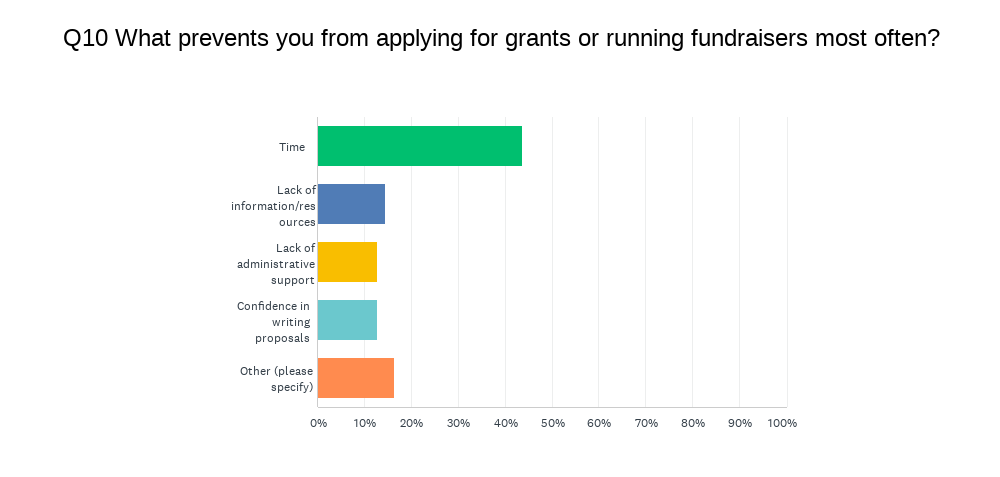
When it comes to securing funding, teachers face several obstacles—but time is by far the biggest barrier. More than half (53%) cite lack of time as their primary challenge for grant applications, and 44% say it’s also a major hurdle for fundraising efforts.
Confidence in proposal writing is another pain point, with 35% of teachers feeling unsure about crafting strong applications. Additionally, 33% report struggling to find clear information and resources about available grants. These challenges highlight the need for streamlined processes and better support systems to help educators access funding opportunities.
Most teachers have organized a fundraiser
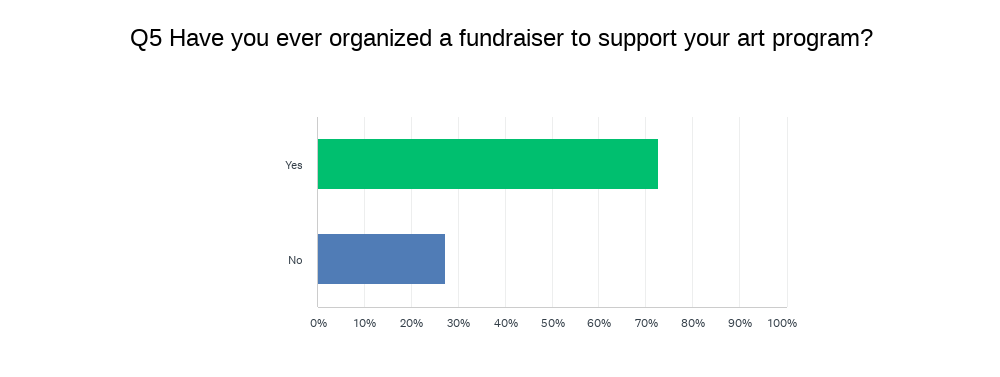
Fundraising wins and their impact
The most common fundraisers were art sales and crowdfunding, but teachers shared a variety of creative approaches in response to three follow-up questions:
What worked best—and why?
Top fundraisers included programs like Square1 Art, Artsonia, and Art to Remember, along with community events such as art shows, Empty Bowl dinners, and sales of student-made items. Success factors often came down to simple setup, vendor support, holiday timing, strong community involvement, and effective social media promotion. Other wins included grants and platforms like DonorsChoose, especially when paired with corporate matching.
How much was raised—and how was it used?
Amounts ranged from a few hundred dollars to over $10,000. Most funds supported art supplies, clay, glazes, kilns, and pottery wheels, while others funded field trips, guest artists, art camps, and even community projects. Overall, these efforts enhanced student learning and expanded creative opportunities.
What would have made fundraising easier or more impactful?
Common themes included more time, help from parents or PTO, stronger community outreach, administrative support, and less paperwork. Teachers also wished for display samples, easier promotion tools, and partnerships to reach a wider audience.
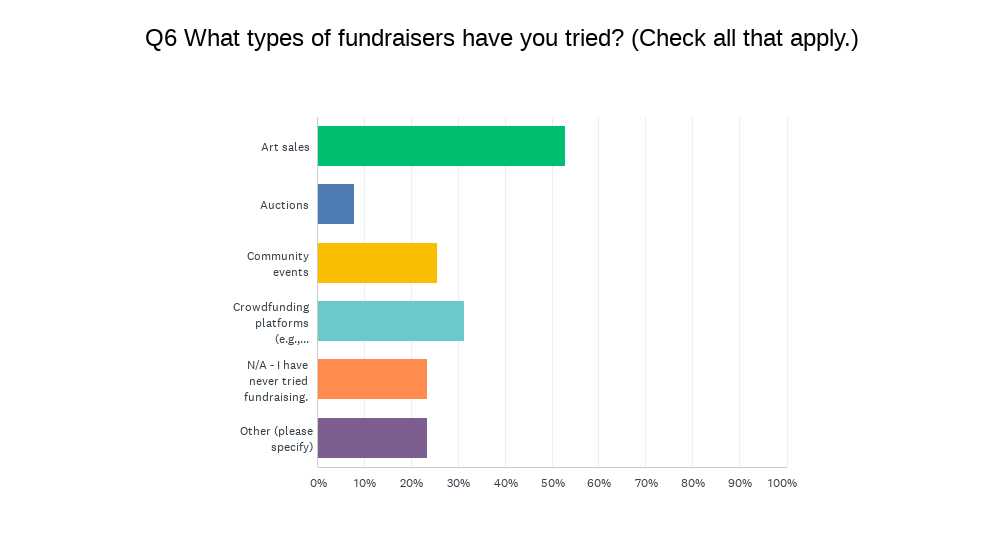
Main fundraising barriers: time and lack of information/resources.
The main challenges were lack of time and resources, but respondents also cited:
- Limited community support or low-income populations.
- Difficulty with promotion and communication.
- Administrative restrictions or lack of school backing.
- Competing priorities and teacher workload.
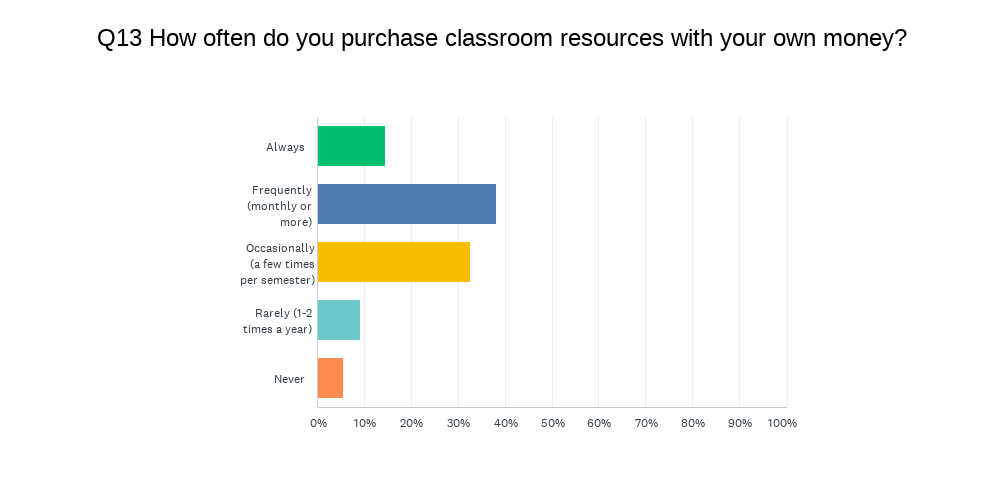
Teachers cover the cost—here’s what they’re buying
Most teachers frequently—or at least occasionally—purchase supplies with their own money to keep their art programs running.
In the follow-up question, we asked what items teachers most often buy out of pocket. Responses showed that clay and glazes top the list, followed by essential art materials like paint, brushes, and paper, as well as specialty items for sculpture or mixed media projects. Teachers also reported buying tools, sponges, cleaning supplies, and last-minute items when school purchasing processes are too slow. Many noted covering costs for seasonal or display materials for art shows, along with inexpensive items from local stores or Amazon to ensure projects stay on track.
Most valued tools and resources